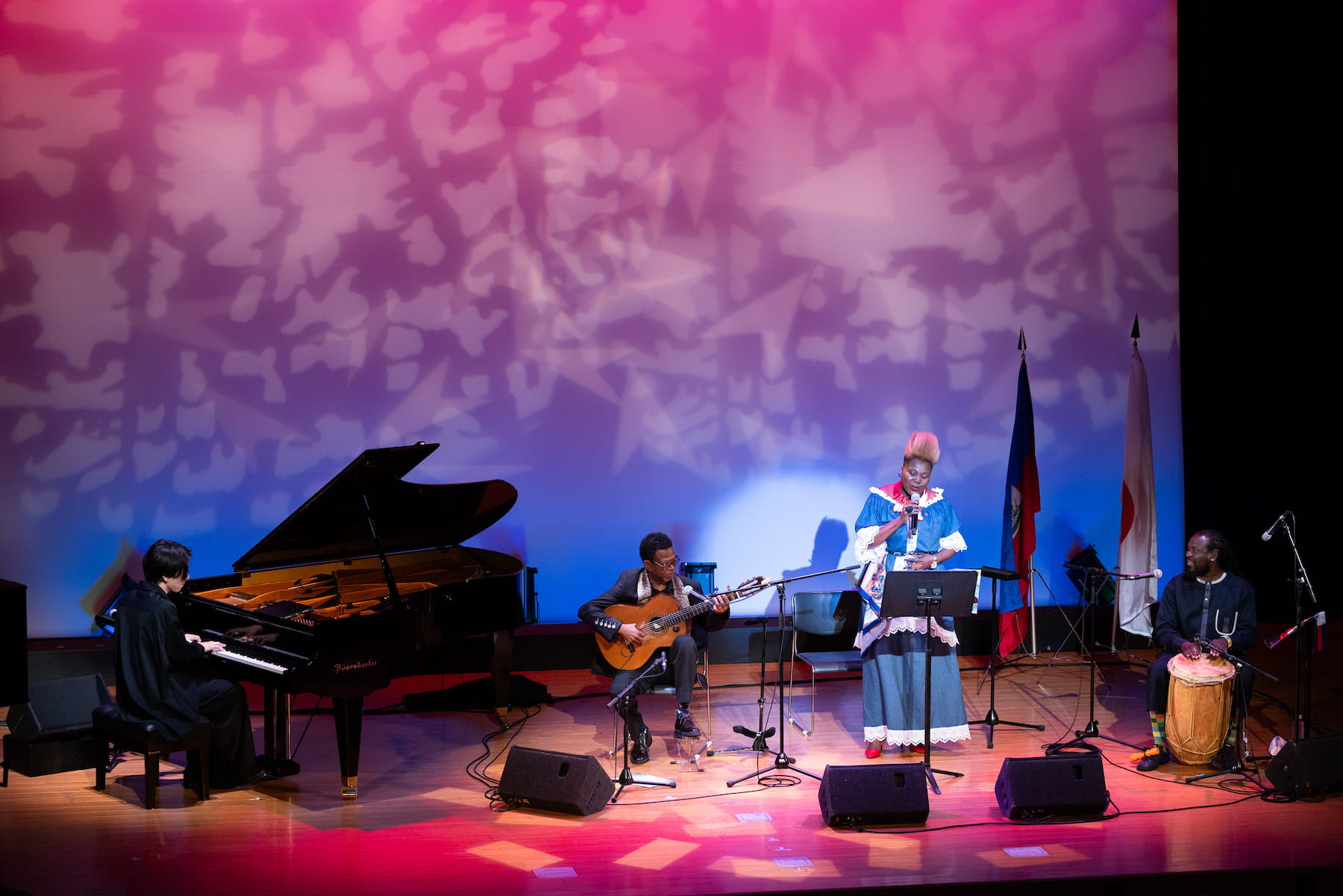
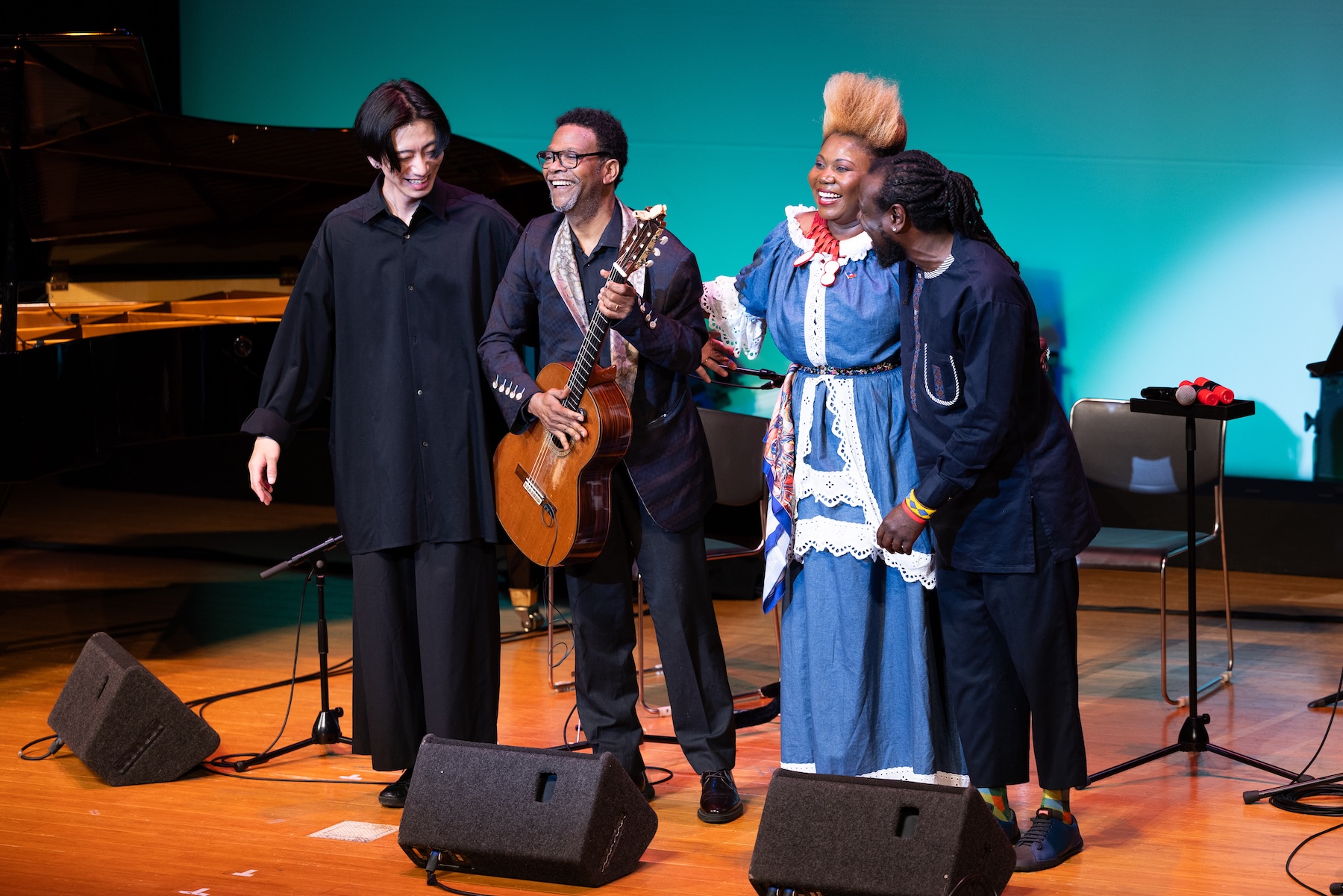
On May 31, 2026, the Embassy of the Republic of Haiti in Japan and the Min-On Concert Association, in cooperation with Minato City, presented the lecture concert “Poem and Rhythm from Haiti” at the Akasaka Civic Center Hall in Tokyo. The event commemorated the 70th anniversary of diplomatic relations between Haiti and Japan.
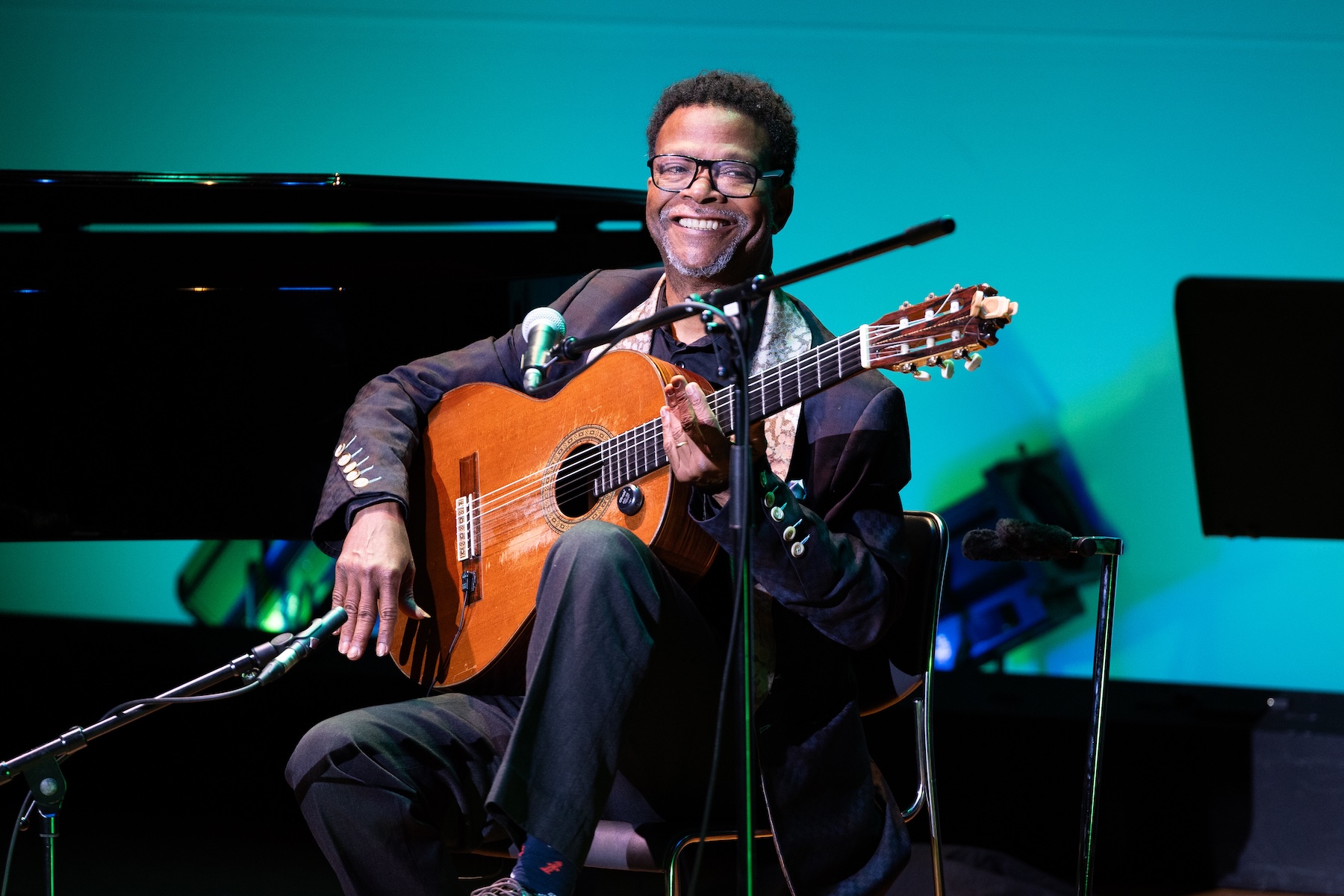
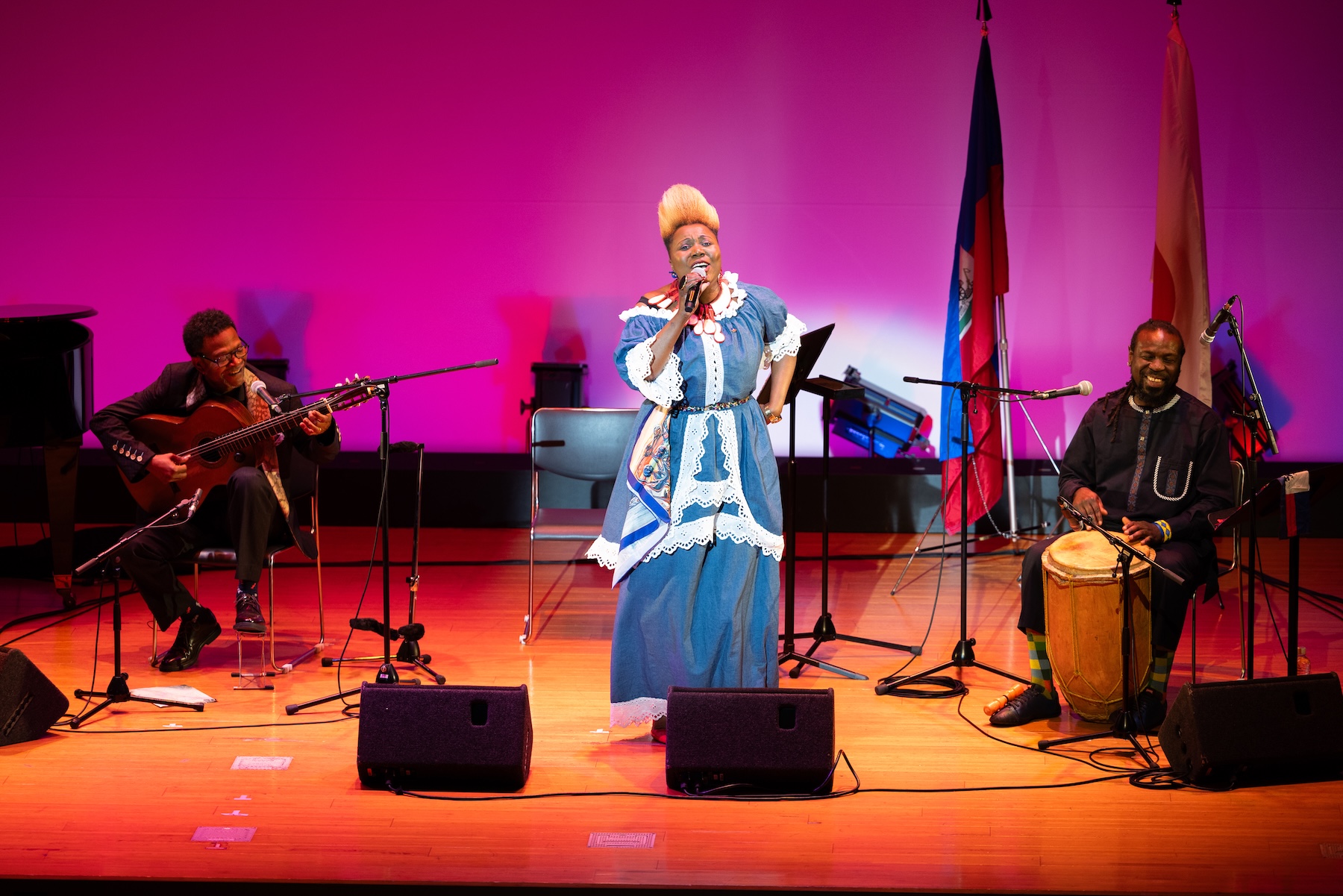
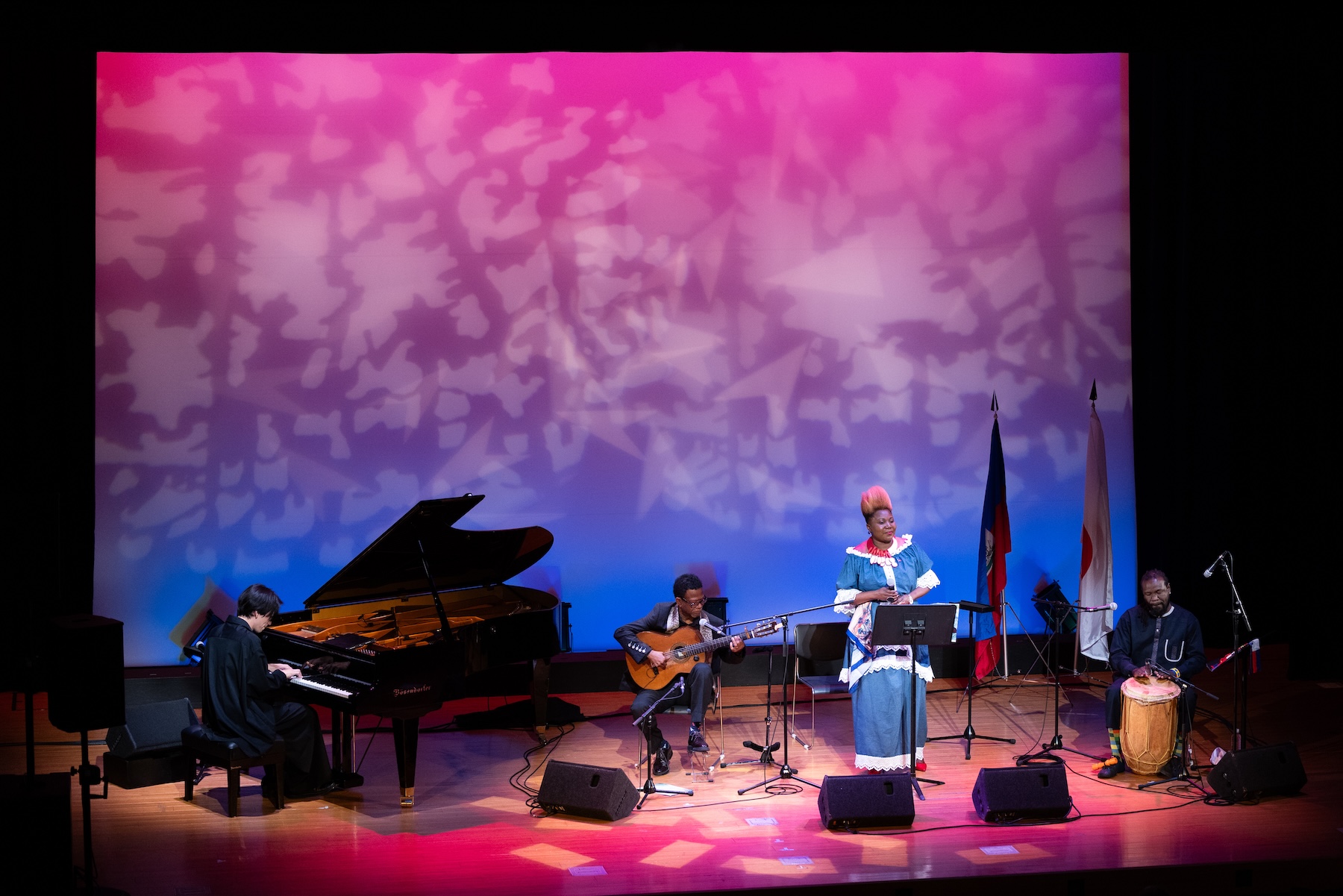
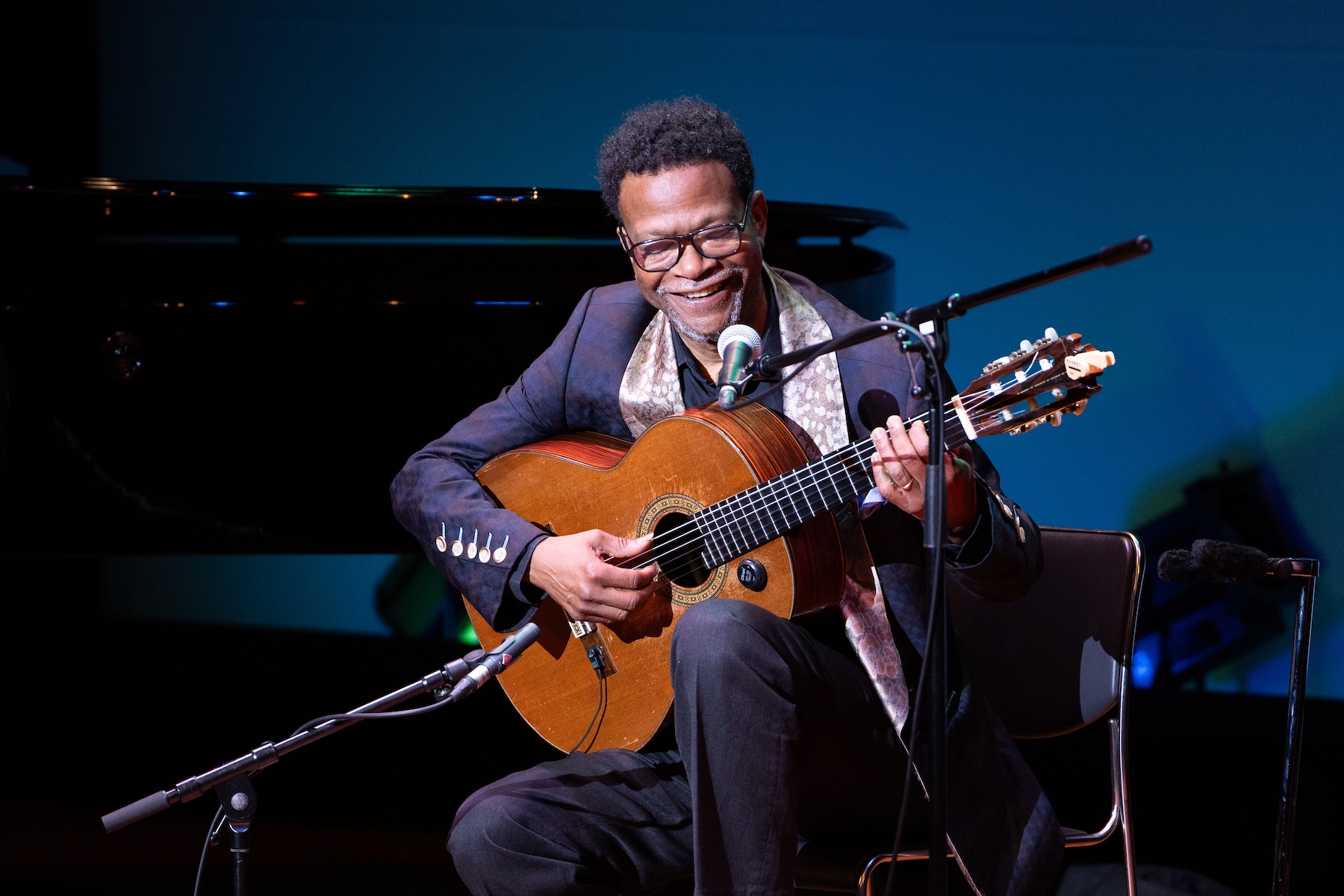
The concert featured the Haitian music group Métiskacao, comprising guitarist Amos Coulanges and vocalist Kécita Clénard, alongside percussionist Claude Saturne. Japanese pianist, trumpeter and composer Mao Sone also joined the ensemble, creating a memorable musical exchange that celebrated the rich cultural connections between Haiti and Japan.
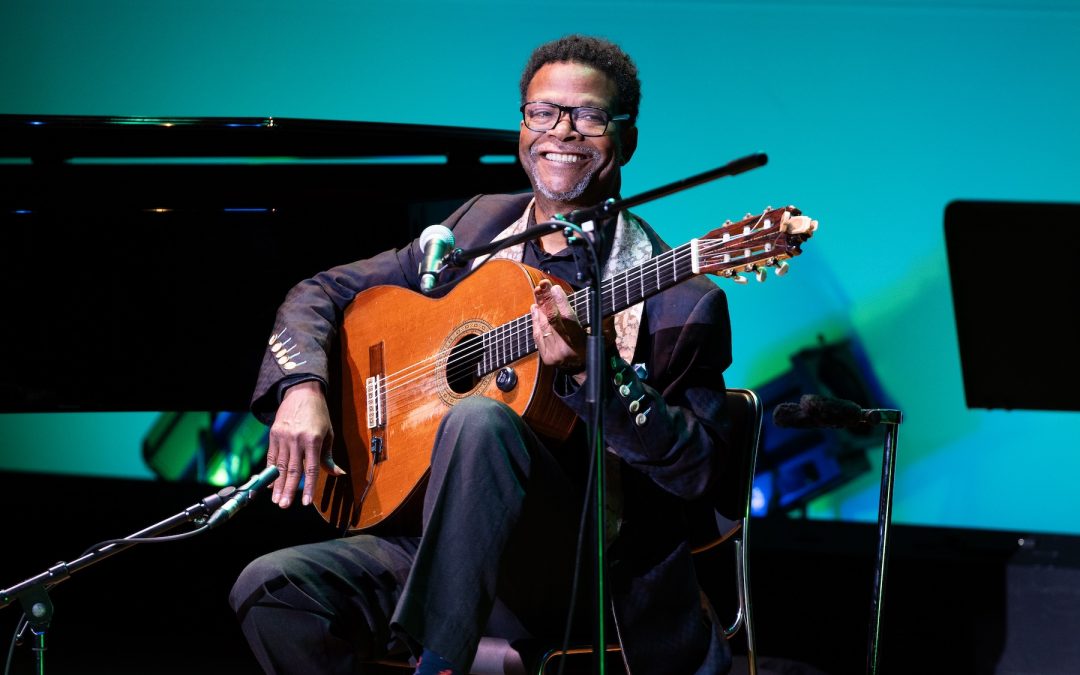
Following the concert, we spoke with guitarist, composer and music director Amos Coulanges about his reflections on the performance, his collaboration with Mao Sone, the rich diversity of Haitian music, and the profound role music plays in his life.
(Interview conducted on May 31, 2026.)
◆ Watch the interview highlights:
MIN-ON: Thank you for your wonderful performance today. How did you feel about the concert, and what were your impressions of the audience’s response?
Amos Coulanges: After today’s concert, we felt an incredible sense of energy and strength in our hearts. It is difficult to put into words, but when the audience rose to their feet and applauded, we were filled with an overwhelming sense of joy. I was especially happy to share that moment with my wife, Kécita Clénard, and our percussionist, Claude Saturne. The warmth and enthusiasm of the audience made the experience truly special for all of us.
MIN-ON: You performed songs in both Haitian Creole and French. Was there a particular moment or reaction from the audience that left a lasting impression on you?
Coulanges: Yes, absolutely. We sing primarily in Haitian Creole, with some songs in French as well. Although the audience may not have understood the lyrics, we could feel that our music was reaching them. It is difficult to explain exactly how this happens, but through our melodies, harmonies and rhythms, we were able to convey our feelings to the audience. We could sense a genuine connection with those listening, and that made the experience truly wonderful.
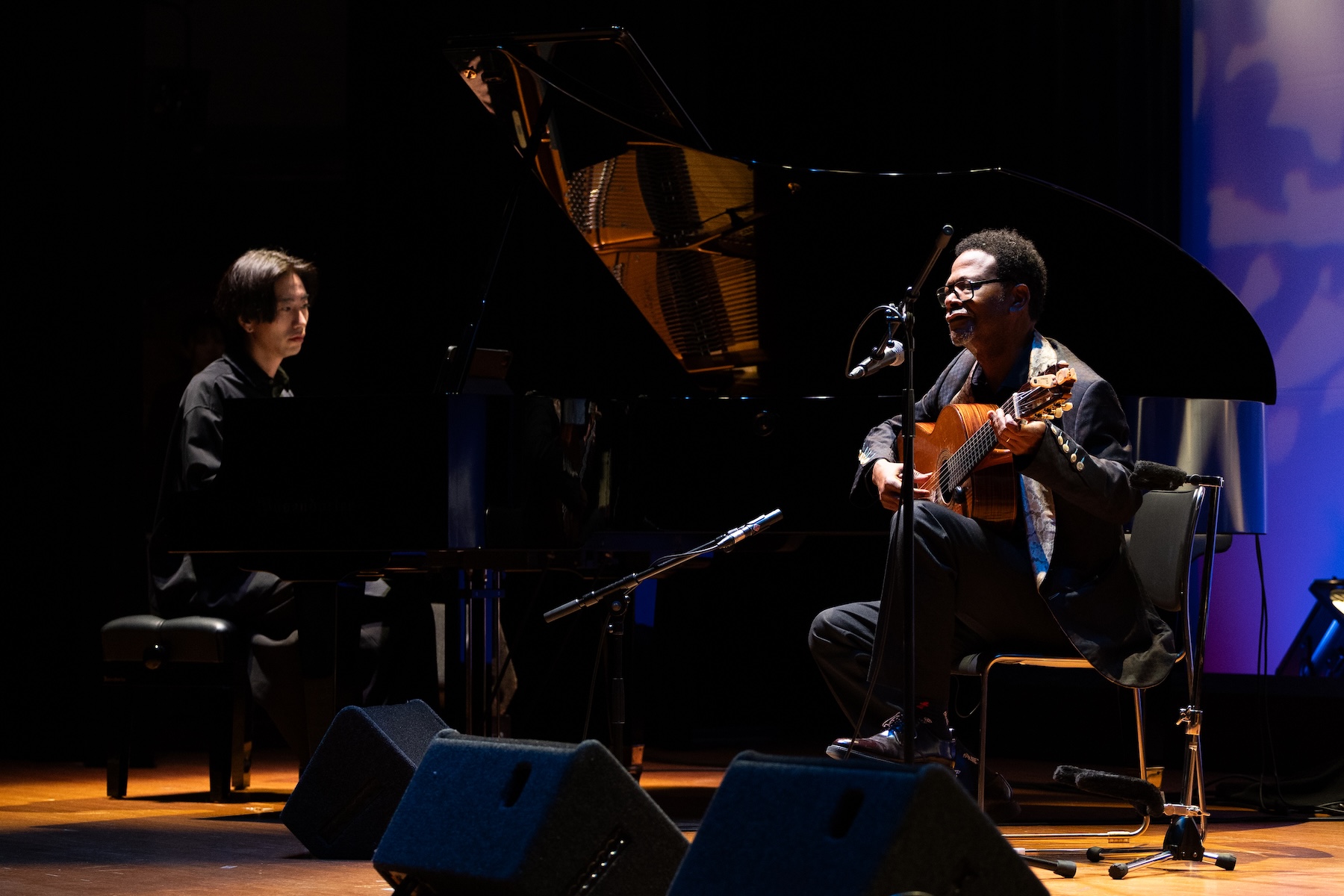
MIN-ON: You also performed alongside Japanese pianist Mao Sone, including a rendition of the traditional Japanese song “Sakura Sakura.” What was that experience like?
Coulanges: Before we performed “Sakura Sakura,” Mao Sone played several pieces of Haitian music, including a work by Ludovic Lamothe, the renowned Haitian pianist and composer sometimes known as the “Black Chopin” (Chopin noir).
He performed the piece with remarkable skill and sensitivity, and I was deeply impressed by the feeling he brought to the music. As for “Sakura Sakura,” I have known this melody for a long time. I teach music in France, and when I want to introduce my students to music from outside Europe—not just the works of composers such as Bach and Beethoven—“Sakura Sakura” is one of the pieces that comes to mind. It is a beautiful melody, rich in emotion. For me, performing “Sakura Sakura” was a gift to the Japanese audience. Having known this melody for so long, I felt it was especially meaningful to share it with the people of Japan. To me, this traditional Japanese song captures something of the spirit of Japan itself.
MIN-ON: Today’s concert showcased the remarkable diversity of Haitian music. In your view, what sets Haitian music apart and gives it its distinctive character?
Coulanges: Ah, Haiti! Everyone sings, everyone dances. We often say that we are a people who sing, dance and laugh. My repertoire is not exclusively Haitian, but the majority of it draws on the rich musical traditions of Haiti. Haitian music reflects a wide range of influences, particularly African and European traditions, including those of France. In a sense, Haitian music is a meeting point for cultures from around the world, bringing together diverse traditions, histories and forms of musical expression. It is this rich blend of influences that gives Haitian music its unique character and makes it so special.
MIN-ON: In addition to your work as a performer, you are also an accomplished composer and music director. What do you consider most important in your creative process?
Coulanges: For me, every aspect of music is important. Composing, performing, learning and sharing are all interconnected, and each plays an essential role in the creative process. Above all, I believe that sharing music with others is what gives it its deepest meaning. But to share music meaningfully, we must first take the time to learn it and study it in depth. Whether it is reading a score, sight-reading, working out the fingering, or exploring the sounds and harmonies, every step is important. Through studying music, we make new discoveries; through sharing it with others, we discover something entirely different. Each stage of the process offers its own insights, and every part contributes to the richness of the musical experience.
MIN-ON: You have dedicated much of your life to music, both as a performer and as an educator. What continues to inspire you to make music?
Coulanges: I was introduced to music by my family at a young age, and later went on to study it at university. Today, I also share my knowledge and experience by teaching music. In many ways, music has been a constant presence throughout my life.Of course, there are many other things I can do. I can cook, read and act, for example.
But music is what I am always drawn to, what I truly want to do. I am a musician, and music is not simply my profession—it is an essential part of who I am. Music is my life.
MIN-ON: Finally, on a personal level, what place does music hold in your life, and what does it mean to you?
Coulanges: Music is the sweetness of life—the syrup, the sugar that makes life richer and more beautiful.
Music has the power to bring us happiness, even in our darkest moments. Whether we are facing hardship, loss or the aftermath of an accident, music can offer comfort and awaken a sense of joy within us.
No matter what life brings, I believe music has the extraordinary power to lift our spirits and remind us of the joy that life can hold.
Related Links
◆ Watch the Full Concert: “Poem and Rhythm from Haiti” (2026)
◆ Concert News: Lecture Concert “Poem and Rhythm from Haiti” Marks 70 Years of Haiti-Japan Ties
◆ Min-On Music Journey No. 51: Republic of Haiti
If you have any comments regarding this article, please feel free to email us at: publicrelations@min-on.or.jp
Min-On Concert Association
–Music Binds Our Hearts–