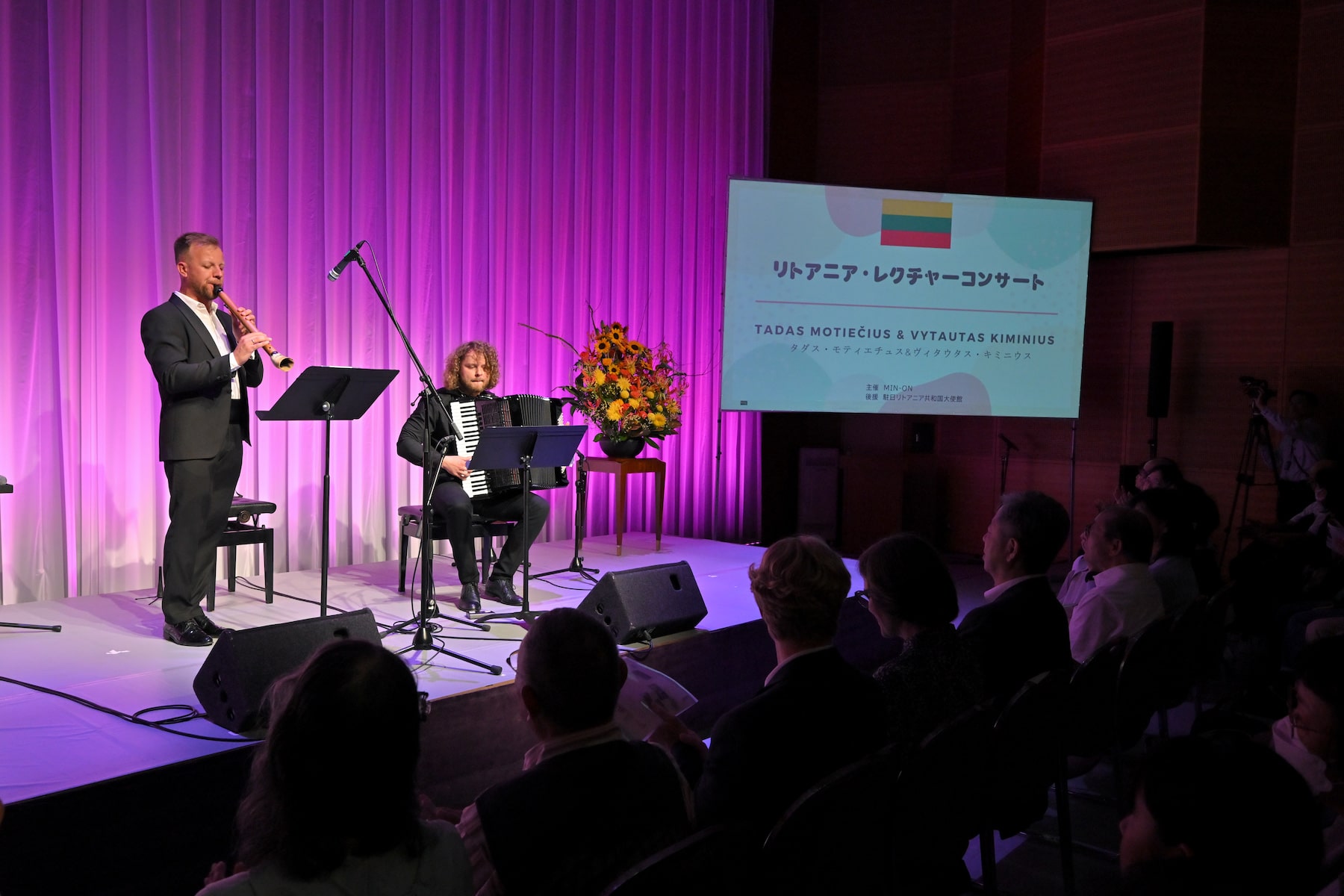
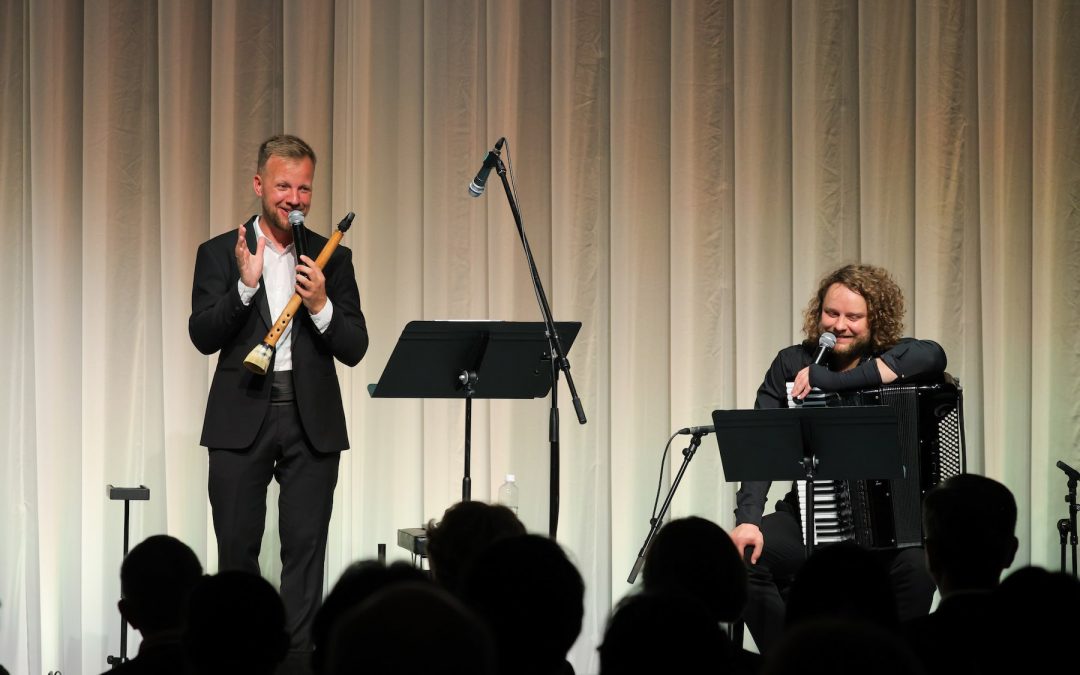
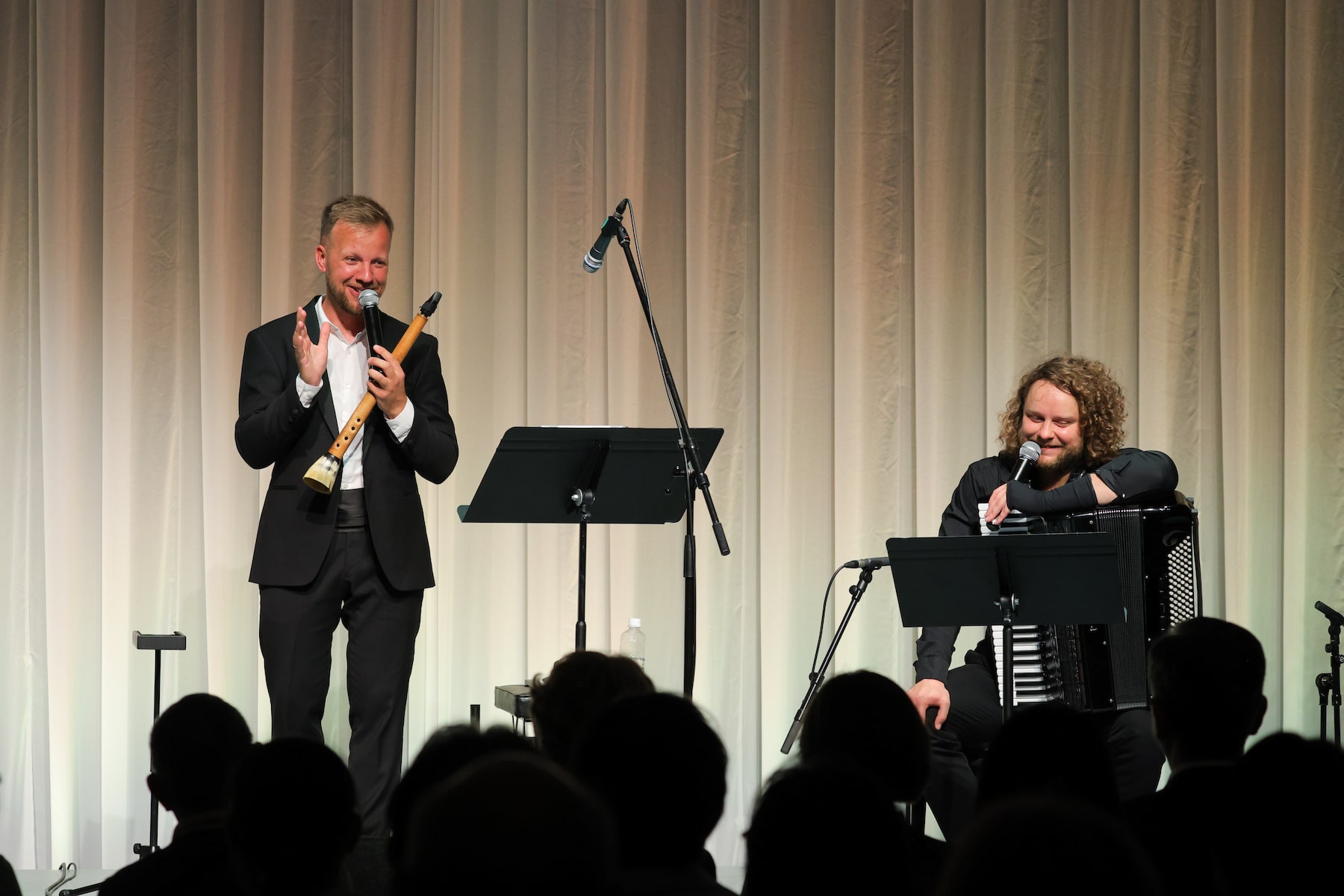
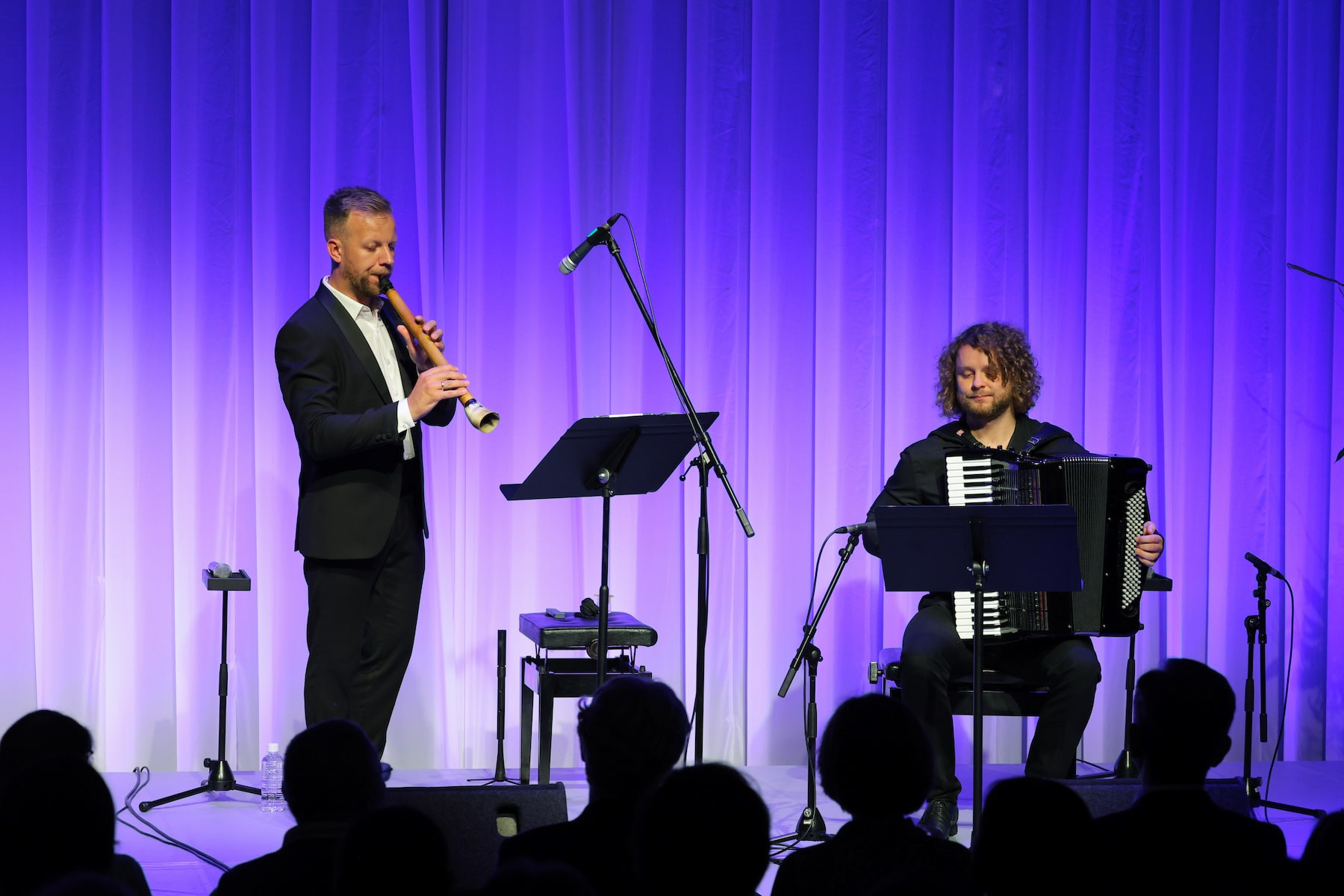
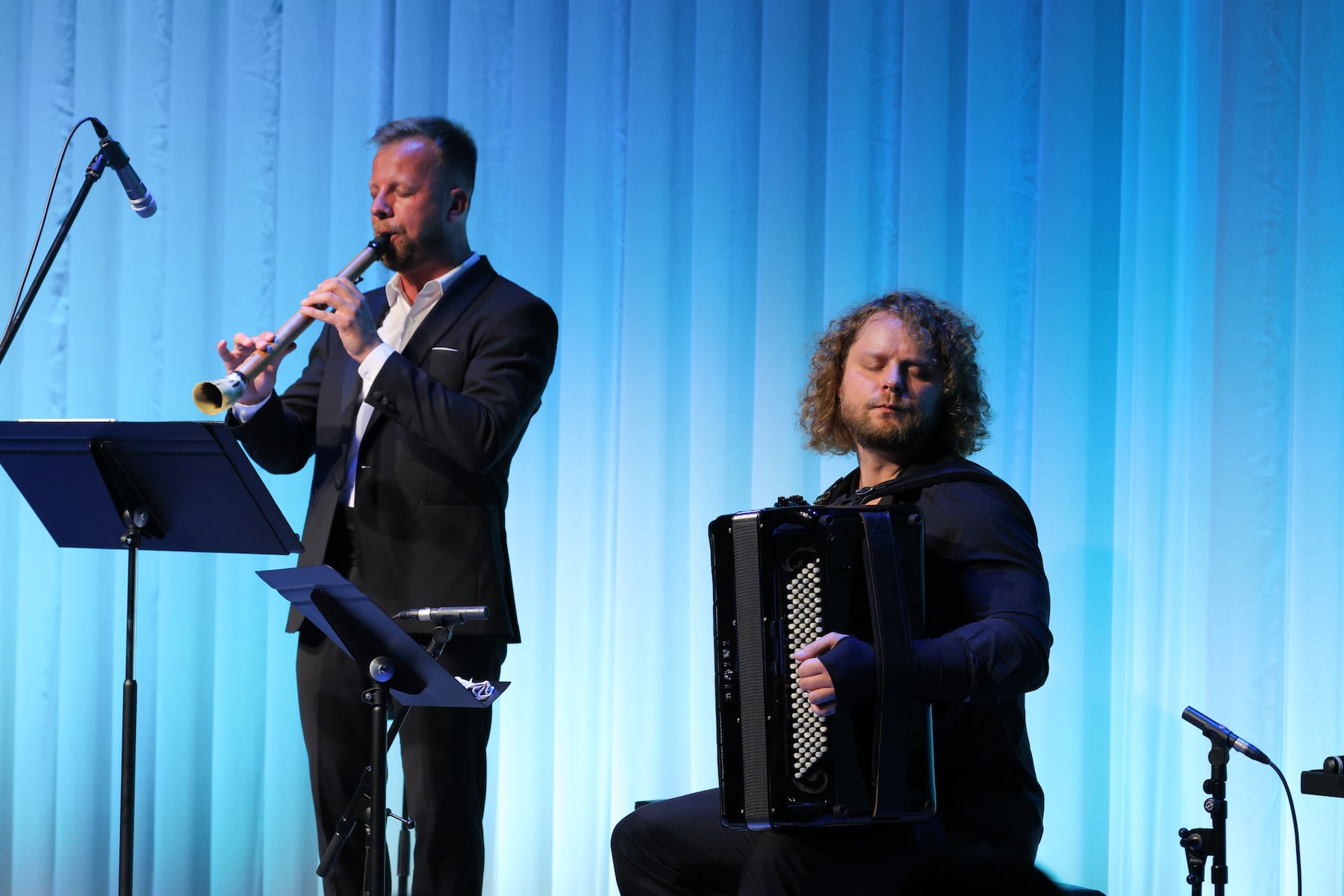
In August this year, we hosted the Lithuania Lecture Concert, featuring two outstanding Lithuanian musicians: accordionist Mr. Tadas Motiečius and birbynė player Mr. Vytautas Kiminius. Following their performance,we had the opportunity to interview them about their music and experiences.
◆ Watch the interview highlights at
Tadas Motiečius (Accordionist) Tadas Motiečius is one of Lithuania’s leading accordionists, acclaimed for both technical mastery and artistic versatility. A laureate of over thirty international competitions, he has performed as a soloist and as an ensemble member in Europe, the United States, Australia, and Central America. He frequently collaborates with chamber and symphony orchestras, as well as contemporary, jazz, and vocal groups. Honored with the Lithuanian Queen Morta Prize and awards from two Lithuanian Presidents, he also works with major theatres including the National Opera and Ballet Theatre. Motiečius continues to expand the expressive possibilities of the accordion on global stages. Vytautas Kiminius (Birbynė) Vytautas Kiminius is one of Lithuania’s foremost birbynė players and conductor of the Alytus Symphony Orchestra “Svajonė.” A graduate of the Lithuanian Academy of Music and Theatre, he also studied in Italy under oboist Alessandro Baccini. Kiminius has introduced the birbynė to audiences around the world, including a live performance on Deutsche Welle’s “The Sound of Europe.” He has conducted leading Lithuanian orchestras and appeared at national events such as the Lithuanian Song Celebration. Recognized with multiple international awards, Kiminius is dedicated to showcasing the birbynė’s unique sound blending its folkloric heritage with contemporary musical.
◆Full Concert Video: Lithuania Lecture Concert
MIN-ON: Thank you for sharing your time to be interviewed. What do you find most appealing about your instrument?
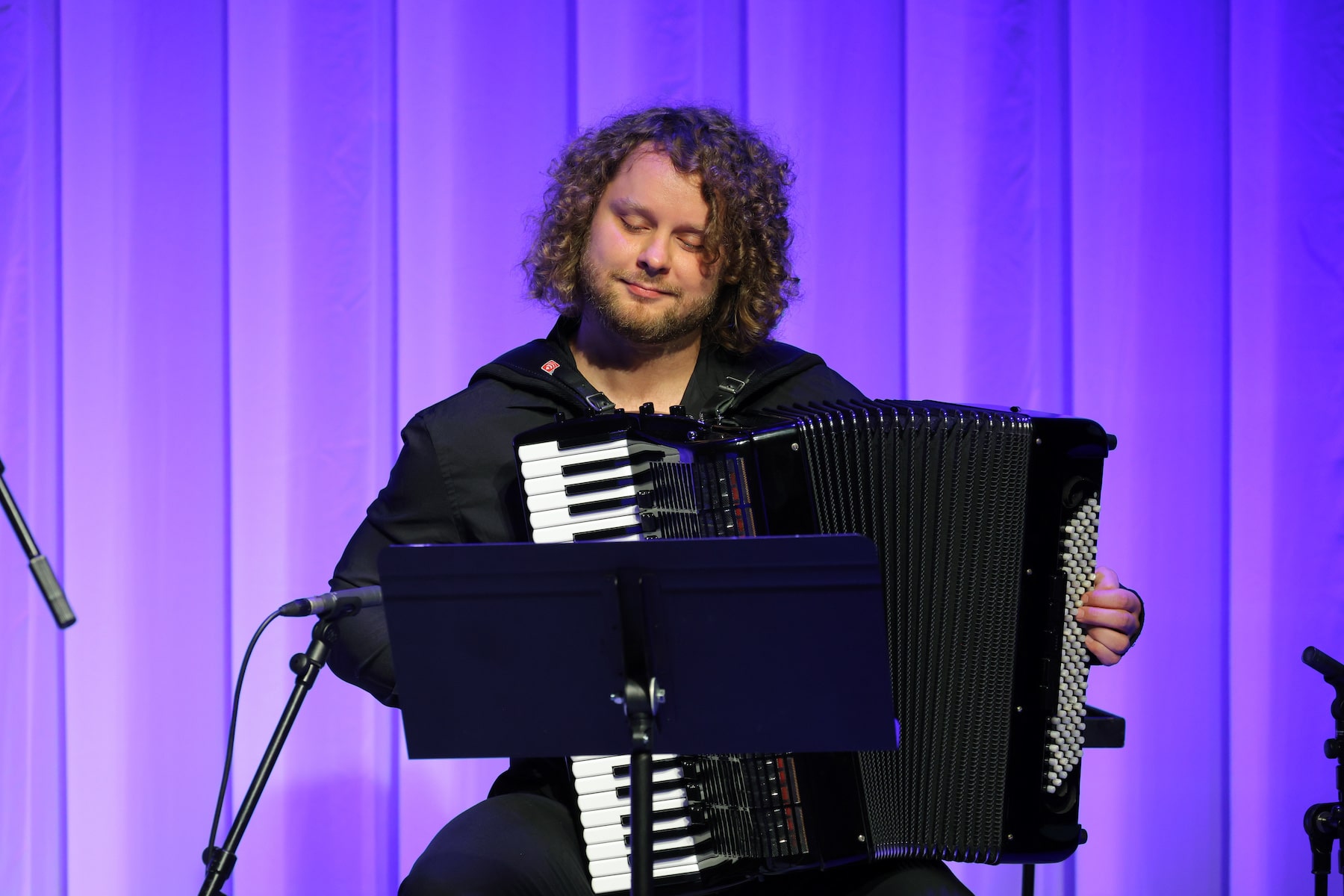
Tadas (Accordion): I always say that the accordion is a very universal instrument. Many people think it’s only for folk or light music, but in fact, we also play a lot of classical and contemporary repertoire. The accordion is quite young—about 200 years old—and has only been recognized as a professional concert instrument 50 or 60 years ago. I love it because of its versatility—you can play almost anything with it.
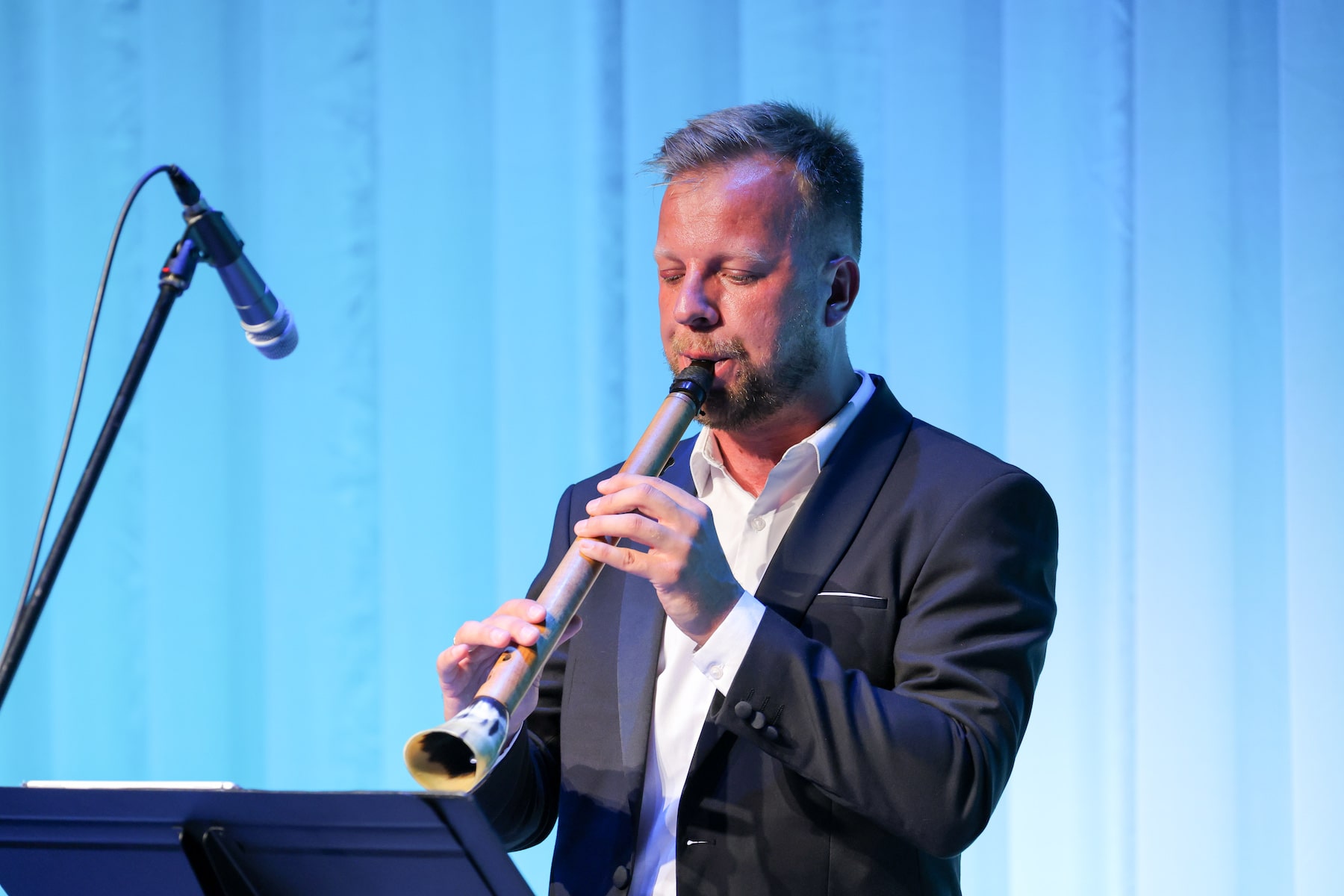
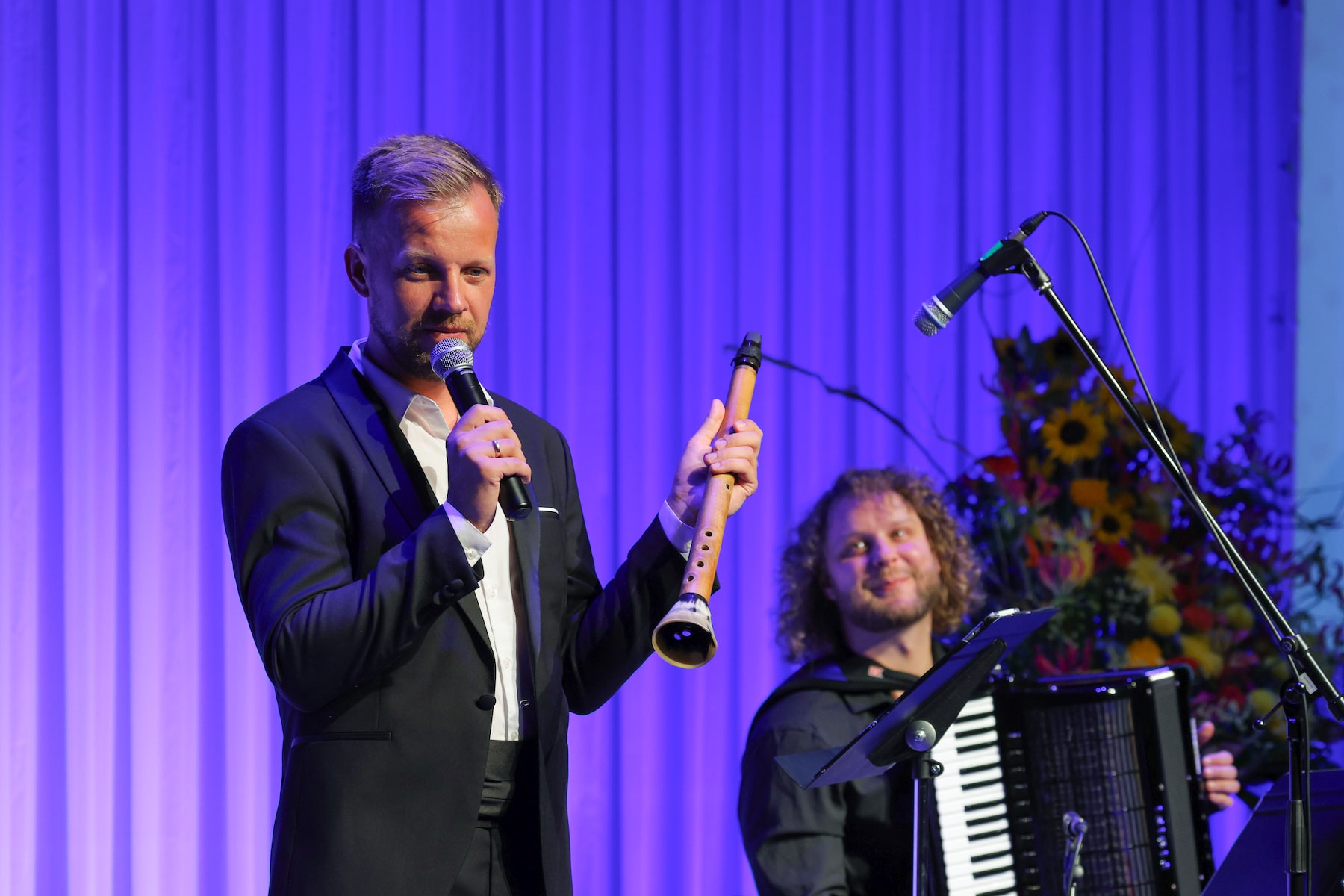
Vytautas (Birbynė): I always remember what my teacher in Italy, Maestro Alessandro Baccini, once said. He told me: “In Italy we have great architecture, great painters, and great composers, but we don’t have an instrument like the birbynė.” The birbynė is truly unique and rare—there is nothing quite like it anywhere else in the world. For many people who see it for the first time, they are surprised, both by its appearance and sound. That’s what makes it so special. For me, it is an honor to introduce this instrument here in Japan and to share its unique sound.
MIN-ON: How was your experience performing for children in today’s daytime concert?
Tadas: It was wonderful and very special. We often do similar concerts in Lithuania, but today I saw such curiosity and surprise in the children’s eyes—it was their first time to see our instruments, and their reaction means so much to us. It’s truly amazing to be able to share our music and instruments with people on the other side of the world, more than 8,000 kilometers away.
Vytautas: I was pleasantly surprised when we asked the children what the instruments were, and they immediately answered “accordion” and “birbynė.” In Lithuania, many children don’t even know the names of their own traditional instruments. Japanese children are very smart. Although shy, they were very attentive and interested in our performance. For us, it was a great joy to play, to teach them about our history and instruments, and to present them with a of musical “gift.”
MIN-ON: When performing together as a duo, how do you approach creating music?
Tadas:We were friends before we became a duo. We first met while touring with a youth orchestra that included musicians from Lithuania, Latvia, Estonia, and France. Later, we studied at the same academy, in departments located in the same building. We spent a lot of time together as friends, and after about five years, we thought, “Why don’t we try playing together?” Because of that friendship, making music together feels very natural and easy. Dancing Suite by composer Matti Murto—the final piece in tonight’s program—is the very first piece we ever performed as a duo. It has become a kind of symbol for us.
MIN-ON: Lithuania is known as the “singing nation,” with the Singing Revolution playing an important role in regaining independence. From your own experience, what do you feel about the power of music?
Tadas: The Singing Revolution is very important for us. During the Soviet occupation, before independence was achieved, the first signs of freedom came through singing—people from all three Baltic states joining hands and singing together. Singing is deeply rooted in our culture and identity. That is why we often say Lithuania is a “singing country.” For us, music—especially singing—is a vital force that connects people.
MIN-ON: Lastly, could you give a message to the youth in Japan and around the world?
Vytautas: I believe that music is a bridge between countries. We need to recognize this, feel it, and do our best to preserve it. Music helps us to truly know each other. For example, last week I was in France, where musicians from nine different countries—including Mexico, Albania, Spain, Lithuania, and Brazil—came together. The first thing we noticed was how music connected us immediately. Music is pure and natural. It is not political; it is about life and human feelings. We must protect this and remain strong, keeping music as a way to connect with one another.
Tadas: I would also like to say how wonderful it is that your organization has been building these connections through music for so many years and across so many countries. Please continue this important work.
To the younger generation, I would add this: today’s technology—phones, computers, and so on—can sometimes draw us away from our culture. It can rob us of the joy found in true human connection, the kind that blossoms when we share music together. I encourage young people in Japan and everywhere not to lose this natural way of communicating. Let’s bring it back through music and through genuine interaction. Please don’t give up on these natural connections. Music is a perfect example of that.
Vytautas: A famous conductor once said that classical music never teaches bad things—it teaches us how to be good human beings. While a lot of money is invested in sports and other activities, music uniquely nurtures our inner world. So, my message is: learn music, be good, and trust me—you will be grateful for it in the future.
◆ Concert News
◆ Min-On Music Journey: Lithuania Edition
If you have any comments regarding this article, please feel free to email us at publicrelations@min-on.or.jp
Min-On Concert Association
-Music Binds Our Hearts-