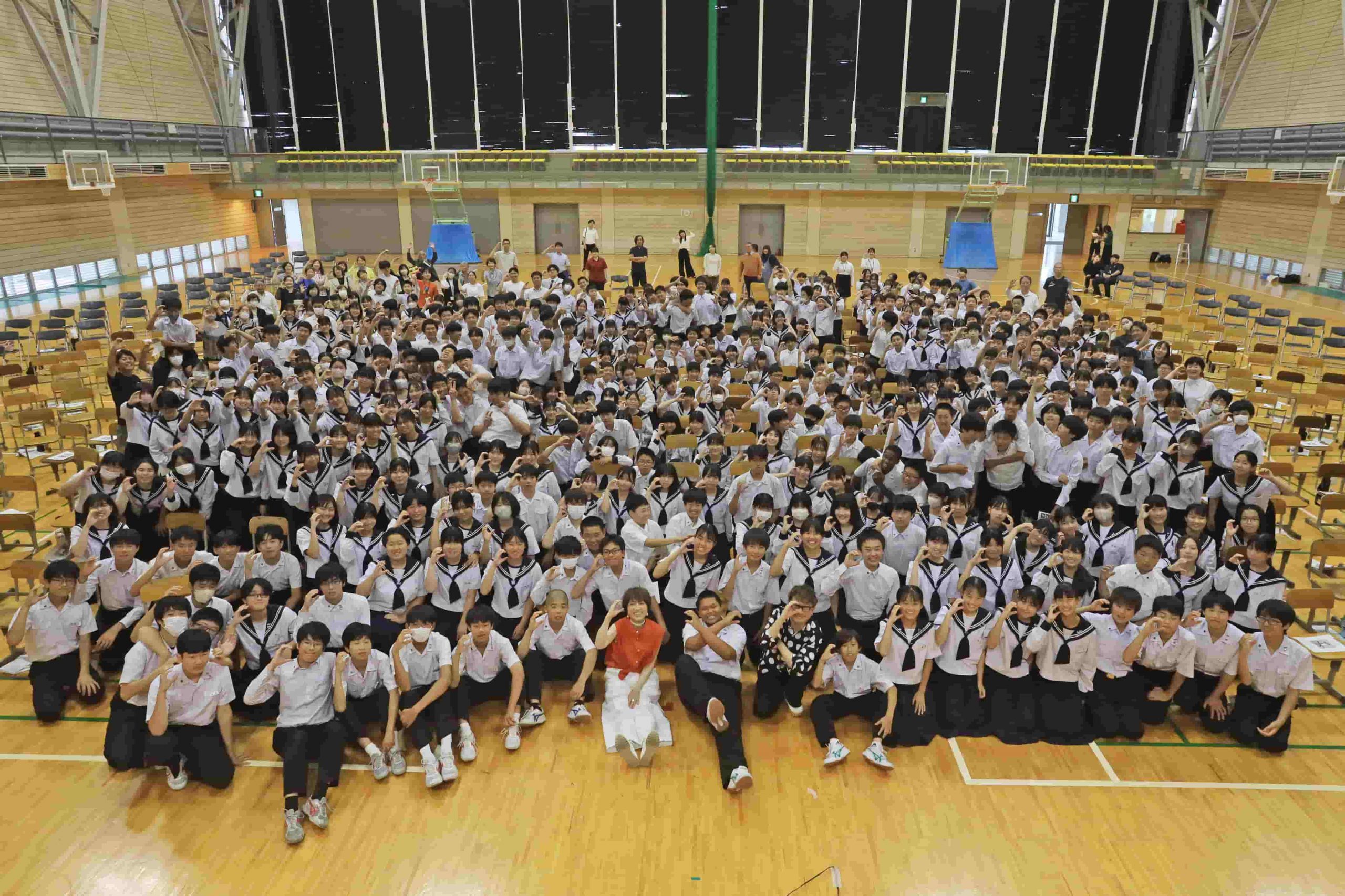
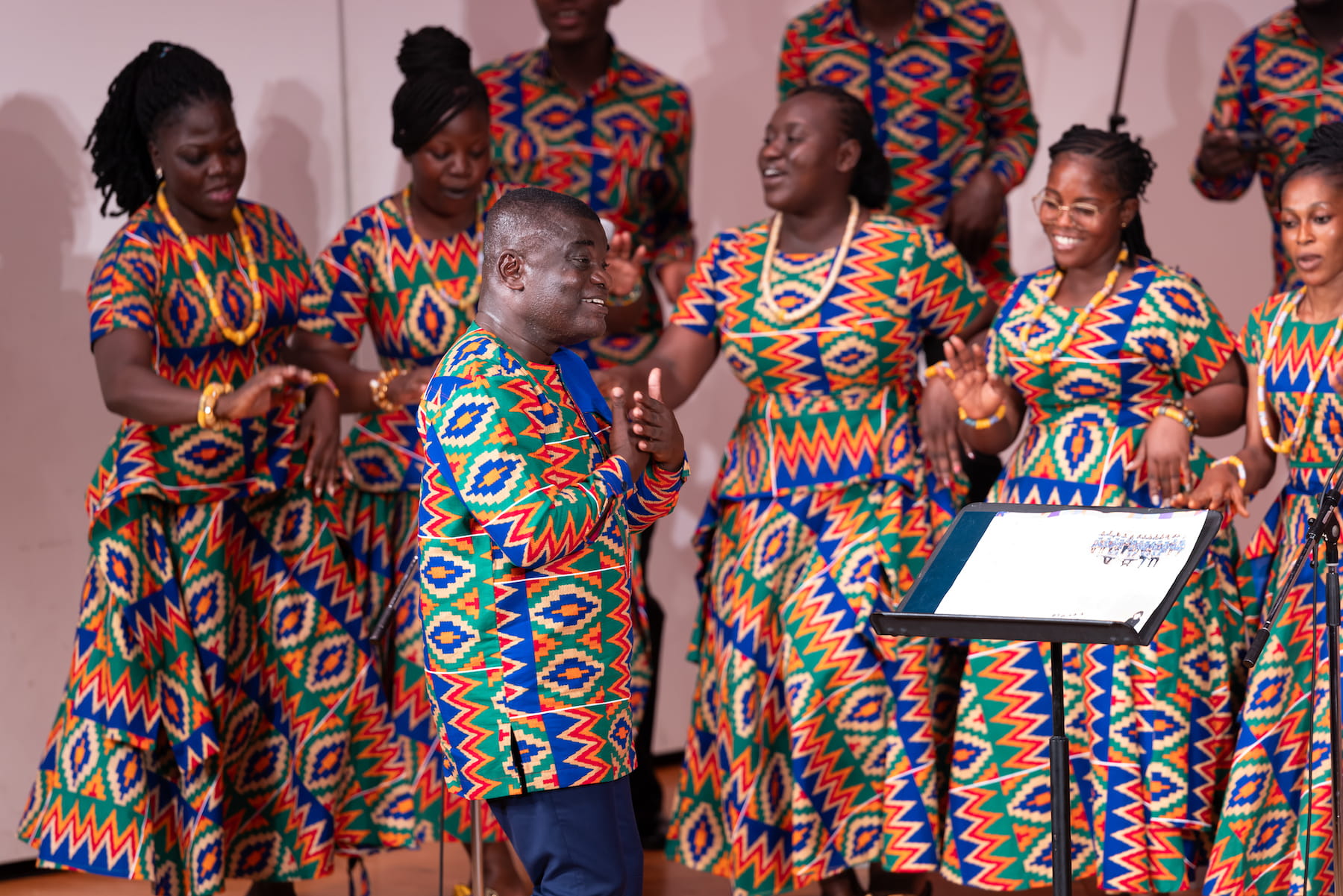
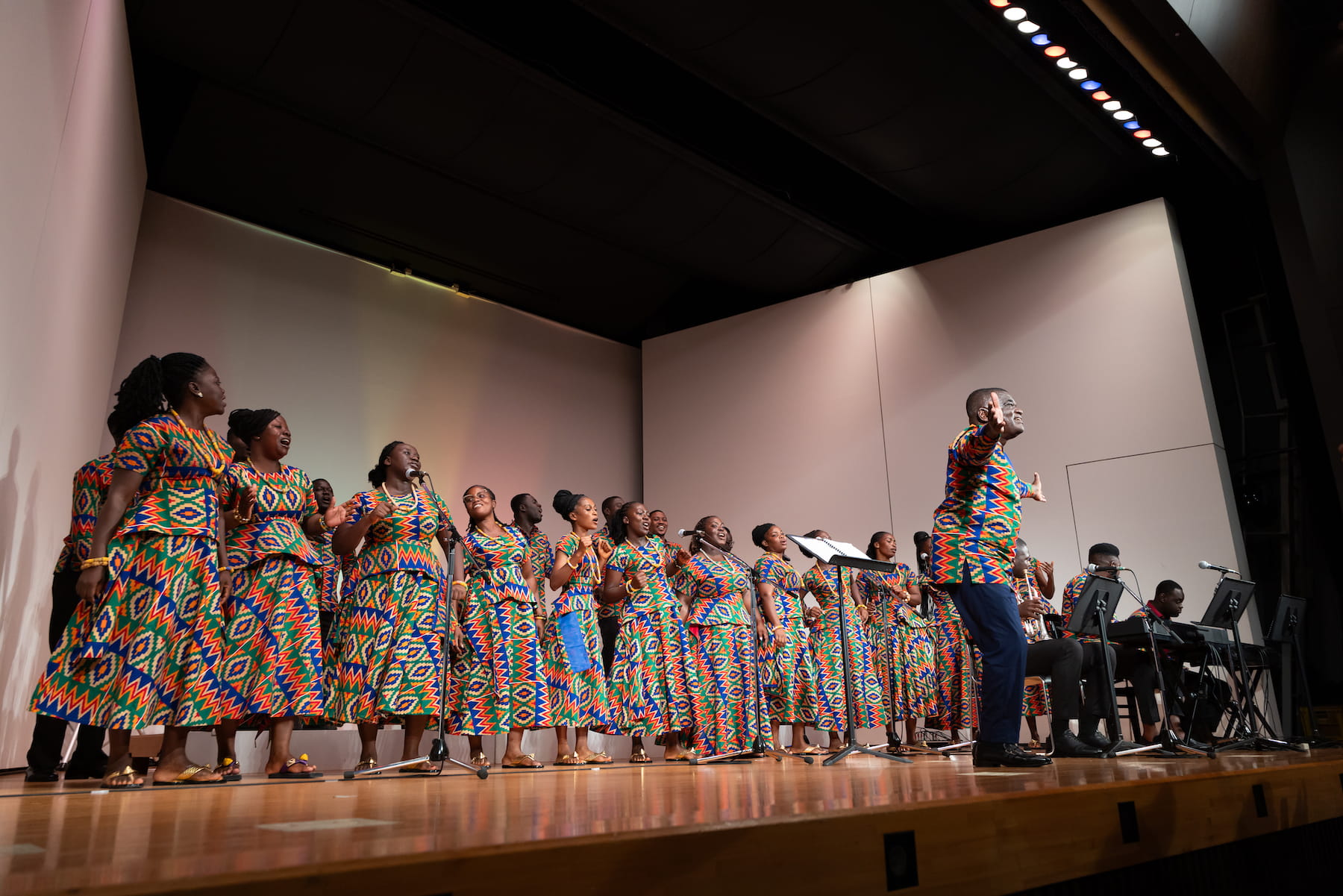
On May 29, 2026, the Embassy of the Republic of Ghana in Japan and the Min-On Concert Association, in cooperation with Minato City, presented Winneba Youth Choir of Ghana: Ghana’s Reset Through Youth, Culture, and Harmony at the Akasaka Civic Center in Tokyo.
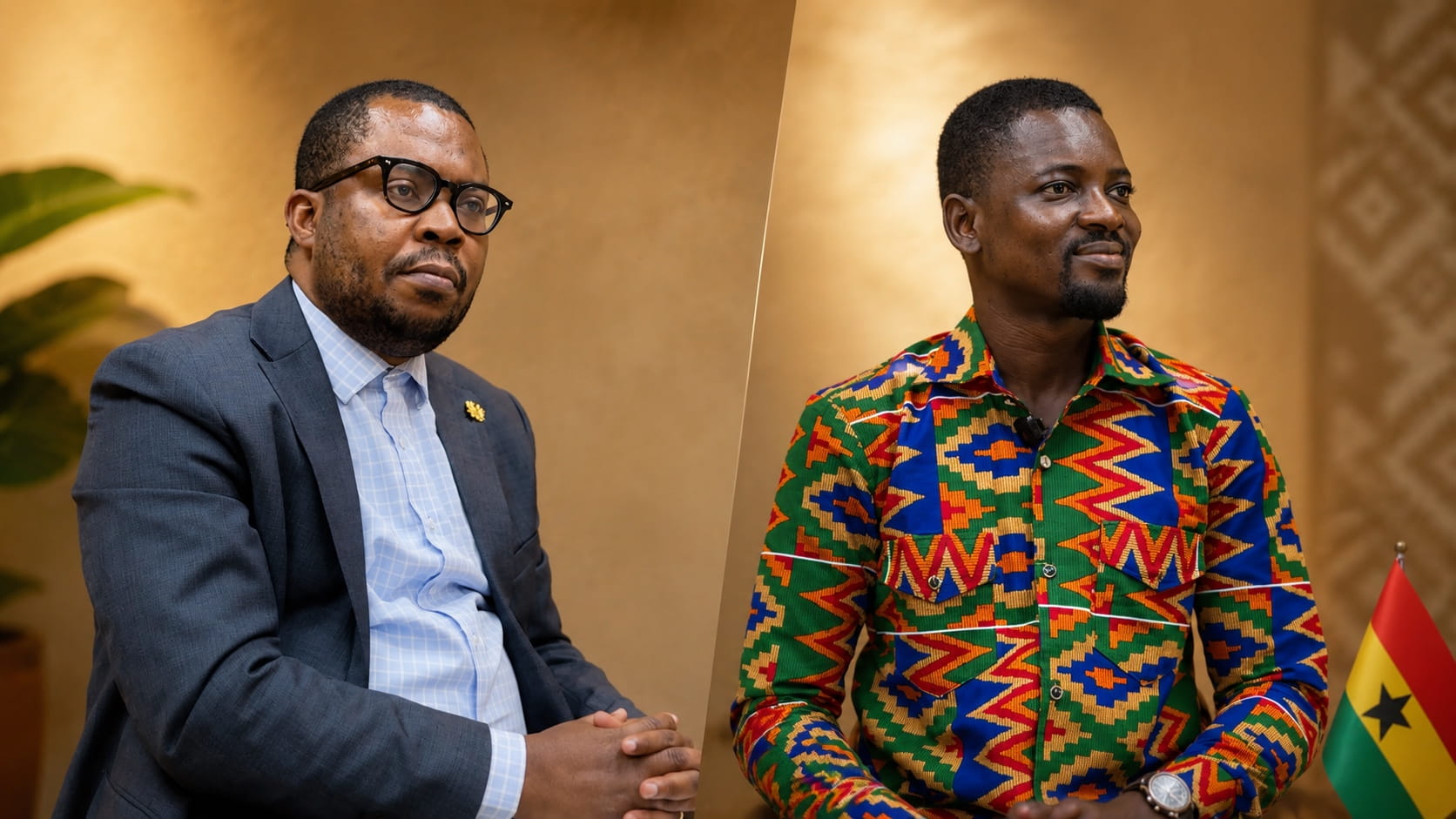
One of Ghana’s leading youth choirs, the Winneba Youth Choir captivated the audience with a vibrant program celebrating the richness and diversity of Ghanaian musical heritage. Their performances ranged from traditional Ghanaian songs and classical choral works to contemporary African music. The concert also featured acclaimed Japanese singer-songwriter Hirari Sato and The Voice of Nyamitease, a Ghanaian gospel group based in Japan, creating a memorable musical dialogue between Ghana and Japan.
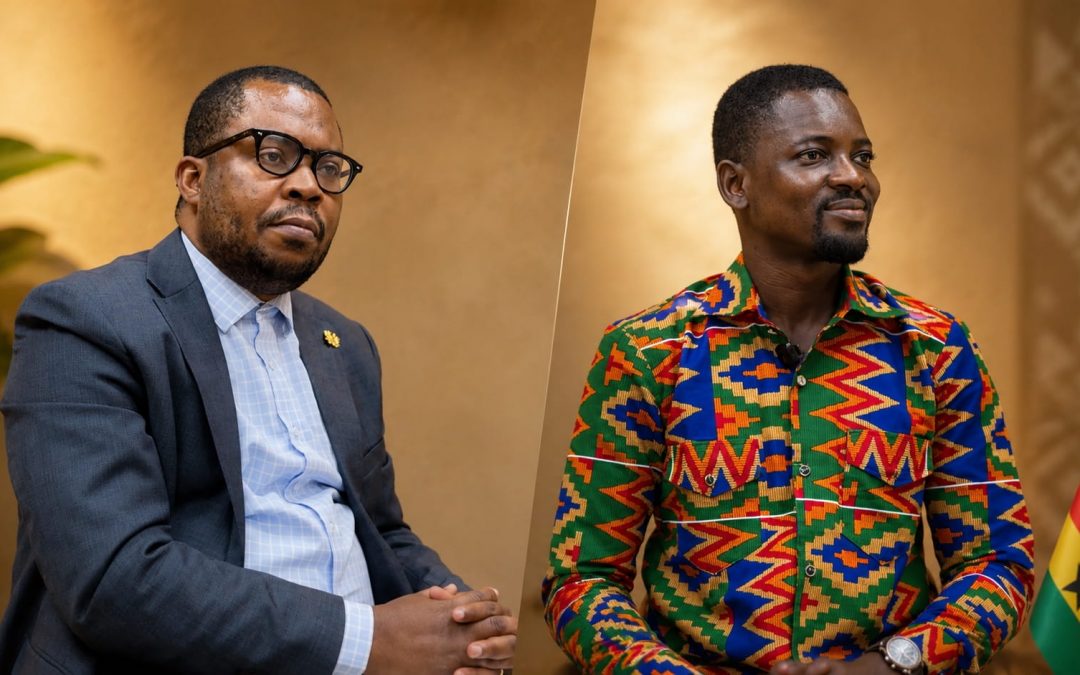
On the day of the concert, we spoke with Christopher E.K. Gaba, Minister Counsellor at the Embassy of the Republic of Ghana in Japan, and Jeffrey Daniel Amoah, a member of the Winneba Youth Choir, about the importance of people-to-people exchange, the richness of Ghanaian culture and music, their impressions of Japan, and the universal power of music to connect people across cultures.
(Interviews conducted on May 29, 2026).
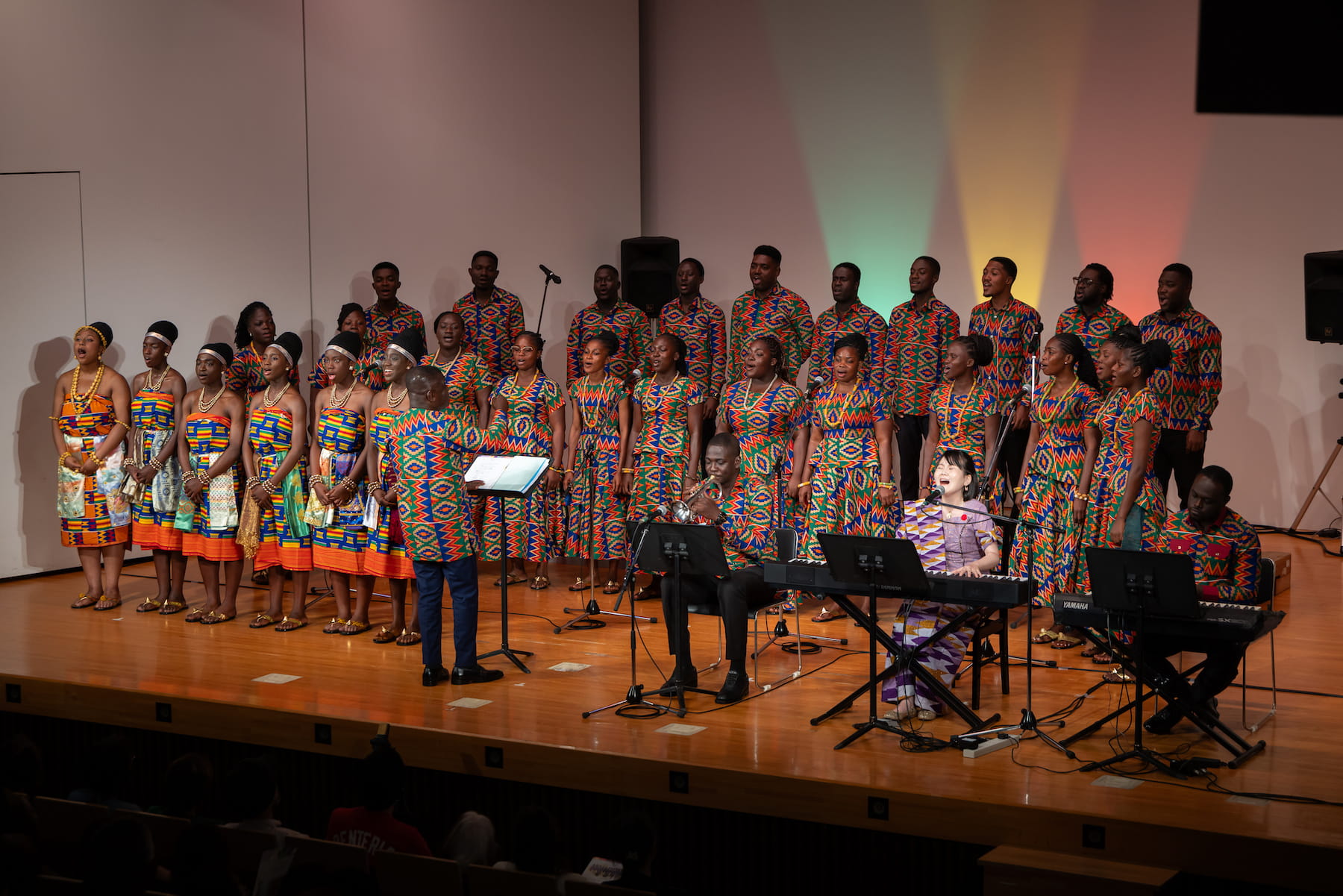
◆ Watch the interview highlights at.
https://youtu.be/-pLsl-Lw5E0
Christopher E.K. Gaba
Minister Counsellor, Embassy of the Republic of Ghana in Japan
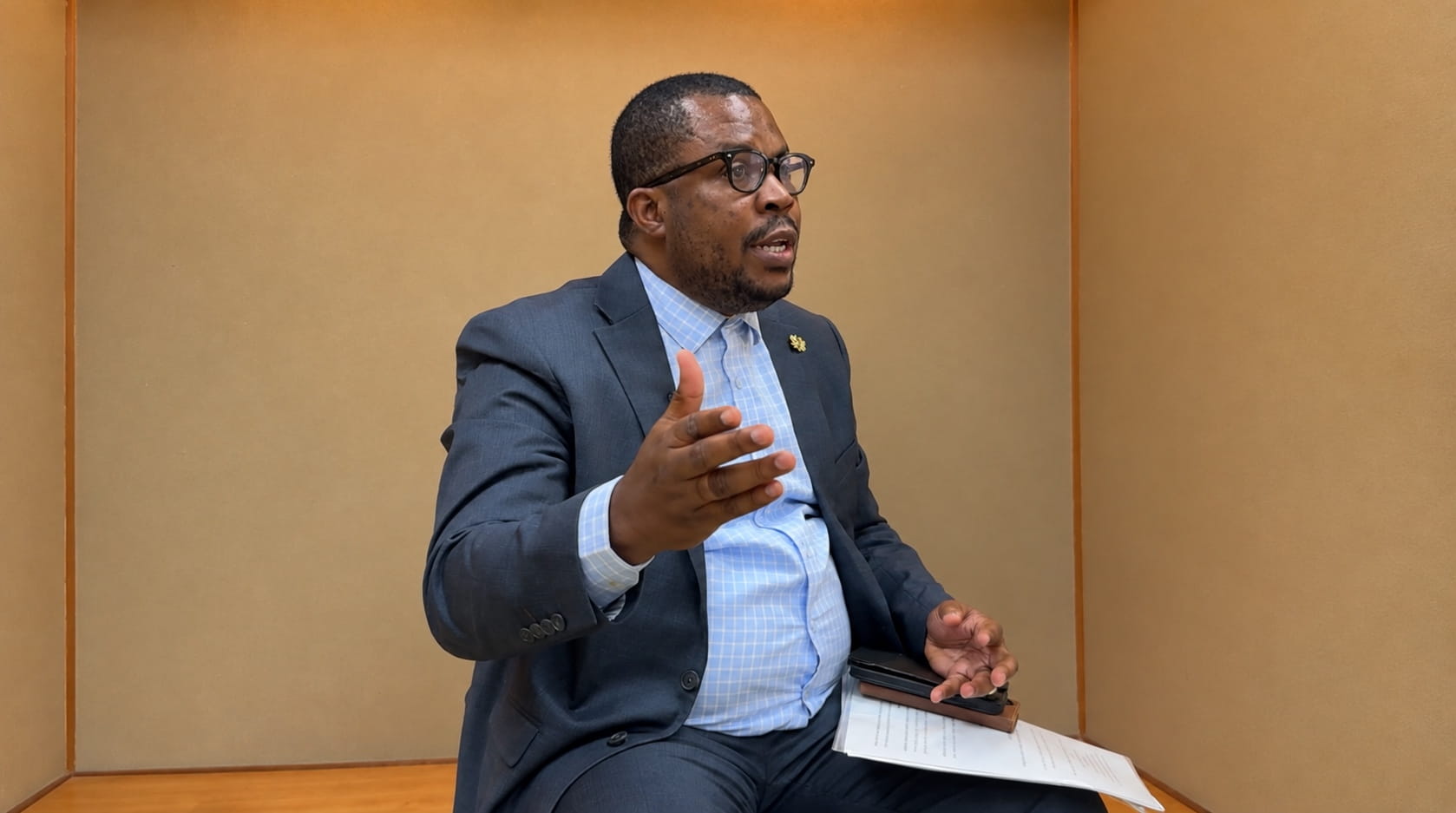
INTERVIEWER: This marks the Winneba Youth Choir’s first visit to Japan. What were your hopes and expectations in bringing the choir to Japan, and what did you hope Japanese audiences would experience through their performances?
Christopher E.K. Gaba First of all, I would like to express my sincere gratitude for the opportunity to share Ghanaian music and culture with the people of Japan. I am also deeply thankful to everyone who came to hear the Winneba Youth Choir and warmly supported this special occasion.
Diplomacy has evolved. If we hope to create a truly lasting impact, it cannot be limited to government-to-government relations alone. The strongest and most enduring connections are built through people-to-people exchange, where mutual understanding, friendship, and trust can flourish across cultures.
The members of the Winneba Youth Choir are young people who are passionate about singing. Through their visit, we hope they can share the songs and culture of Ghana with the Japanese people, while at the same time learning about Japanese culture and taking those experiences home with them.
I hope they will share the beauty of Ghana’s music and culture with audiences in Japan, while also embracing Japanese culture and learning from the people they meet here. It is also our hope that they will return to Ghana carrying not only wonderful memories, but also meaningful experiences and friendships that will further strengthen the bond between our two countries.
INTERVIEWER: You have been living in Japan for nearly three years. What are your impressions of Japan so far?
Gaba: I am living in Japan with my family, and we have all come to love this country. One of my sons has even become fluent in Japanese, which has allowed him to connect with the culture on a deeper level.
Japan is an exceptionally safe and peaceful nation, and during my time here I have discovered a number of cultural similarities between Japan and Ghana. What I find especially remarkable is Japan’s ability to harmoniously blend its rich traditions with modern development. It is a country that has achieved extraordinary progress while remaining deeply committed to preserving its cultural heritage—a quality I greatly admire.
I have also been fortunate to experience Japanese traditions firsthand, including visiting a hot spring and carrying a mikoshi during a local festival. These memorable experiences have given me a deeper appreciation of Japan’s rich cultural heritage and allowed me to discover the many different facets of Japanese culture beyond everyday life.
INTERVIEWER: Many people in Japan immediately associate Ghana with chocolate. Beyond chocolate, what aspects of Ghana would you most like Japanese people to know and appreciate about your country?
Gaba: First and foremost, Ghana is a peaceful and welcoming nation. We have a proud tradition of peaceful democratic transitions, and our country is widely recognized as one of the most stable democracies in the region.
Ghana is also an important economic gateway to Africa. As the host of the Secretariat of the African Continental Free Trade Area (AfCFTA), we are uniquely positioned to connect businesses with opportunities across the African continent.
Beyond its economic significance, Ghana is a wonderful destination to visit. From breathtaking natural landscapes to UNESCO World Heritage Sites that reflect our rich history, the country offers visitors a remarkable blend of culture, heritage, and natural beauty.
But above all, I would say that Ghana’s greatest asset is its people. Ghanaians are known for being warm, welcoming, and genuinely hospitable. You do not necessarily have to know someone before they greet you warmly, offer a handshake, or welcome you as a friend. That spirit of openness and hospitality is an important part of who we are.
We want every visitor to feel not like a stranger, but like a guest among friends—to feel at home from the moment they arrive in Ghana.
INTERVIEWER: What similarities do you see between Ghanaian and Japanese culture?
Gaba: There are also striking similarities in the values that Ghana and Japan place on respect and consideration for others. For example, in Ghana, if an elderly person enters a room and there is nowhere for them to sit, a younger person will naturally stand and offer them their seat. I have noticed the same kind of thoughtfulness and respect for elders in Japan.
There are similarities in other traditional customs as well, including the importance placed on sharing food and extending hospitality to others. Although Ghana and Japan are geographically far apart, I have sometimes been struck by how closely our fundamental values can align. These shared values provide a wonderful foundation for deeper understanding and friendship between our two peoples.
INTERVIEWER: Ghanaian music seems to be deeply connected to everyday life. How would you describe its diversity?
Gaba: Ghana has an extraordinarily rich and diverse musical heritage, reflecting the diversity of the country itself. We have 16 regions, with many different languages and dialects, and each community has its own distinctive songs, rhythms, and musical traditions.
This diversity is an integral part of Ghanaian culture and identity. Through the Winneba Youth Choir’s performances, audiences in Japan have the opportunity to experience a broad spectrum of Ghanaian music and to discover the many different cultural traditions that come together to make Ghana such a vibrant and diverse nation.
INTERVIEWER: The members of the Winneba Youth Choir are not only talented young musicians, but also cultural ambassadors for Ghana. What do you hope their experiences and their story will communicate to audiences in Japan?
Gaba: The choir began from very humble circumstances in the community of Winneba and grew through the talents and commitment of its young members. Today, they perform at important national events and have traveled internationally. I think their story shows that it does not matter where you begin or what kind of background you come from. Through dedication and talent, new opportunities can open up.
Winneba is a fishing community and may not be as internationally known as some other parts of Ghana, but through music, these young people have found a platform that is taking them around the world. I hope that story will inspire people in Japan as well.
INTERVIEWER: Looking ahead, what would you like to see as the next step in strengthening cultural exchange and people-to-people ties between Ghana and Japan?
Gaba: We would be delighted to see the Winneba Youth Choir return to Japan one day and have the opportunity to perform in even more cities.
At the same time, cultural exchange should not move in only one direction. I would also love to see a choir from Japan visit Ghana. That is the true spirit of co-creation—people from both countries meeting, learning from one another, and building lasting connections.
I hope this concert will serve as a catalyst for deeper interaction between Ghana and Japan and contribute to strengthening our people-to-people ties.
There are still many people in Japan who may not know very much about Ghana. Africa is an extraordinarily diverse continent, comprising many different nations, each with its own history, culture, and identity. Ghana, too, has a rich and distinctive heritage that we would like to share with the Japanese people.
I hope this program will give audiences in Japan an opportunity to discover Ghana from a new perspective, deepen their understanding of our country and its people, and, above all, mark the beginning of an even stronger and more enduring friendship between Ghana and Japan.
Jeffrey Daniel Amoah
Winneba Youth Choir
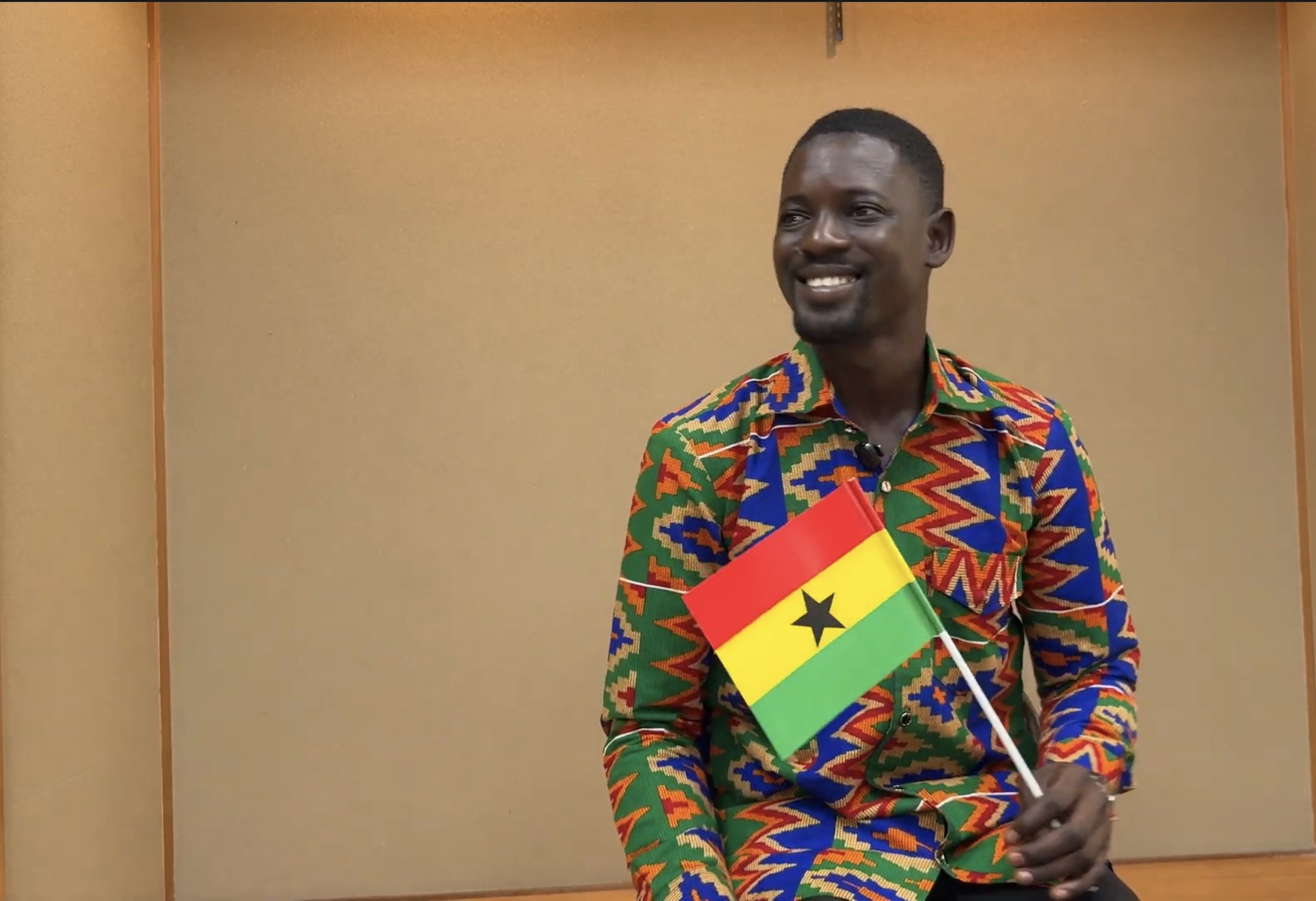
INTERVIEWER: This is your first visit to Japan. What are your impressions of Japan so far?
Jeffrey Daniel Amoah: It has been a wonderful experience. The people we have met have been incredibly kind and welcoming, and everywhere we have visited has been enjoyable. I have been particularly impressed by how clean and well-organized Tokyo is, and we have truly enjoyed every moment of our time here.
We have already had the opportunity to visit Tokyo Tower and the Imperial Palace, which have both been memorable highlights of our trip. For all of us, this has been a very special first visit to Japan, and we will take home many wonderful memories.
INTERVIEWER: The choir’s performances beautifully combine vocal harmony with rhythm, dance, and movement. How do you prepare for a concert like this, and what goes into bringing all these elements together on stage?
Amoah: Once we have selected the songs, we go through an extensive rehearsal process. We also carefully consider what kinds of dances and movements will best complement each piece and enhance the performance.
We are a very versatile choir. We do not limit ourselves to Ghanaian music; we also perform music from other African countries as well as repertoire from around the world. As a result, there is a great deal of preparation that goes into every concert. We spend considerable time planning, rehearsing, and refining each performance so that all the elements come together seamlessly on stage.
INTERVIEWER: You have personally been with the choir for around 18 years. What first inspired you to join?
Amoah: I joined the choir when I was around 12 years old. Even as a child, I was fascinated by anything that produced an interesting or beautiful sound—not just singing, but sounds of all kinds.
A friend introduced me to the choir and told me about the many different activities they were involved in. At the time, however, I did not really know how to sing properly. After joining, I underwent extensive training, and it was only after about a year that I began performing as a member of the choir.
That training marked the beginning of my journey in music. It gave me the foundation I needed and opened the door to a passion that has continued to grow ever since.
INTERVIEWER: What would you say are some of the defining characteristics of Ghanaian music, and what makes it distinctive within the broader African musical tradition?
Amoah: Ghanaian music encompasses a wide range of genres, but one of my personal favorites is highlife. Highlife has an infectious rhythm that almost anyone can move and dance to. The moment you hear it, you naturally begin to feel the music in your body and move along with its rhythm. At the same time, many highlife songs carry thoughtful and meaningful messages, often reflecting on life, society, relationships, and the experiences of everyday people. Even if you do not understand the words, you can still enjoy the rhythms, drums, and sounds. That is one of the wonderful things about the music—it can reach you even before you understand the language.
INTERVIEWER: You also prepared Japanese songs for this visit. What was it like learning to sing in Japanese?
Amoah: It took a great deal of practice, particularly to make sure our pronunciation was accurate. We received valuable help from people at the Embassy, who listened to us and guided us in pronouncing the Japanese words correctly.
Whenever we perform music from another country, we approach the language with the same care and respect. We want to honor the people and the culture behind the music, so we make every effort to pronounce and sing the words as accurately as possible. For us, learning the language is also an important part of understanding and appreciating the culture we are sharing through music.
I have also had the opportunity to listen to Japanese music myself. One song that has stayed with me in particular is Kyu Sakamoto’s “Ue o Muite Arukō,” which is known internationally as “Sukiyaki.” Once I learned more about the meaning behind the lyrics, I came to appreciate the song on an even deeper level. It was a wonderful reminder that music can resonate with us even when we do not initially understand the language.
INTERVIEWER: As young cultural ambassadors representing Ghana, what do you hope to convey to Japanese audiences through your music and performances?
Amoah: Music is one of the ways we come together as a nation, and it is also a wonderful way of inviting others to discover and experience our culture.
Ghana has an incredible variety of music and dance traditions, and we try to bring as much of that diversity as possible into our performances. Some of the pieces we perform were not originally written for choir, so we arrange them specifically for choral performance and interpret them in our own way. In doing so, we hope to present Ghanaian music from a fresh and distinctive perspective.
At the same time, what audiences see and experience on stage represents only one part of Ghanaian culture. I hope that after hearing our music, people in Japan will become curious about Ghana and perhaps be inspired to visit the country themselves. By experiencing our music, dance, people, and culture firsthand, they can discover Ghana from many different perspectives and gain a deeper appreciation of what our country has to offer.
INTERVIEWER: You also performed with Japanese singer-songwriter Hirari Sato. What was that collaboration like?
Amoah: It was a wonderful experience. When I first heard that she would be joining the concert, I looked her up and learned more about her work. Then, when we had our first rehearsal together, I was truly amazed by her talent and performance.
It was a great honor to share the stage with her, and we were delighted to have her as part of the concert. Her presence added something very special to the experience, and we were grateful for the opportunity to perform alongside her.
INTERVIEWER: What are your own dreams and goals for the future?
Amoah: Music will always be a part of me. At the same time, I am studying information technology management, and I would like to continue developing my skills and pursuing my interests in that field as well. There is a phrase I once heard from a late Nigerian singer that has stayed with me: “Music does not need permission to enter your spirit.” I believe that is very true. Wherever you hear music, it can enter your heart without asking permission. You simply feel it. That is what makes music so powerful—it has the ability to reach us directly, beyond language, culture, and even words. That is why I want music to remain an important part of my life, wherever my future may take me.
INTERVIEWER: Finally, what makes you most proud to be Ghanaian?
Amoah: I am always proud to say that I am Ghanaian. Ghanaians are known for being respectful, open, and kind. We enjoy meeting new people and making new friends, and we want everyone who visits Ghana—whether they come from another country or from another part of our own country—to feel safe, welcome, and comfortable in our community. I believe our warmth and hospitality are among the qualities that make me most proud to be Ghanaian. They are an important part of who we are and something I hope we will always cherish and share with others.
I would also like to express my heartfelt gratitude to the Min-On Concert Association, the Embassy of Ghana, and everyone who worked so hard to make this concert possible. We received an incredible amount of support throughout our stay in Japan, and we are truly grateful for the kindness and warm welcome we received. This experience will remain a very special memory for all of us.
◆ Concert News
If you have any comments regarding this article, please feel free to email us at:
publicrelations@min-on.or.jp
Min-On Concert Association
—Music Binds Our Hearts—