
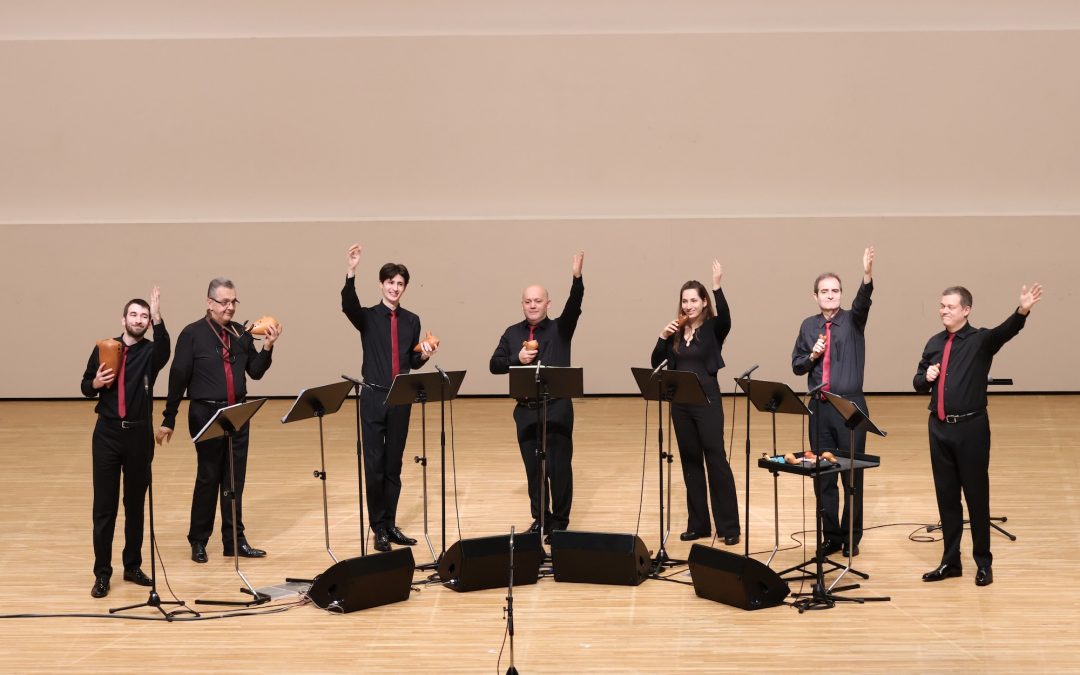
In March 2026, Min-On welcomed Italy’s Gruppo Ocarinistico Budriese (G.O.B.) for its third concert tour with the organization, following its highly acclaimed tours in 2023 and 2024.
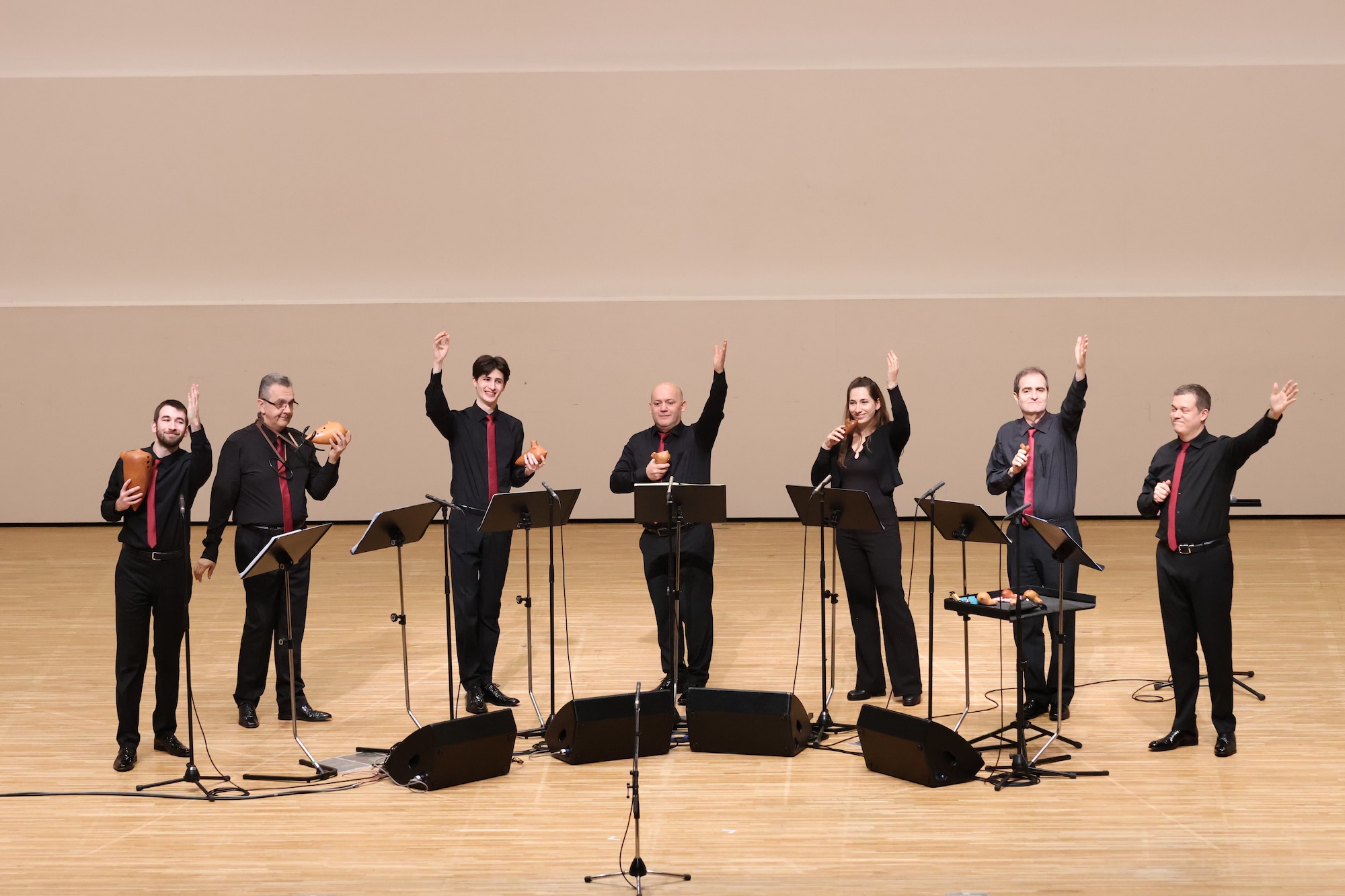
From March 14 to 26, the septet gave eight performances in eight cities across Japan, sharing an ocarina tradition that dates back to 1864. During the tour, we spoke with first-ocarina player Giulio Boccaletti about returning to Japan, carrying forward G.O.B.’s historic legacy, the versatility and special appeal of the ocarina, the experience of seven musicians performing as one, and music’s power to connect people beyond language. (Interview conducted on March 26, 2026.)
◆ Watch the interview highlights
https://youtu.be/ggNKwkaZzOo
MIN-ON:
This marks G.O.B.’s third tour with Min-On. Looking back on your journey across Japan, what moments have been especially memorable?
Boccaletti:
First of all, it is a great joy to be back in Japan for our third tour with Min-On. We always look forward to meeting Japanese audiences, and this tour has been memorable in so many ways. Perhaps the most unforgettable experience was last night’s concert in Aichi. We performed in a magnificent hall where we had appeared before, making it our second opportunity to perform there. The acoustics were simply extraordinary.
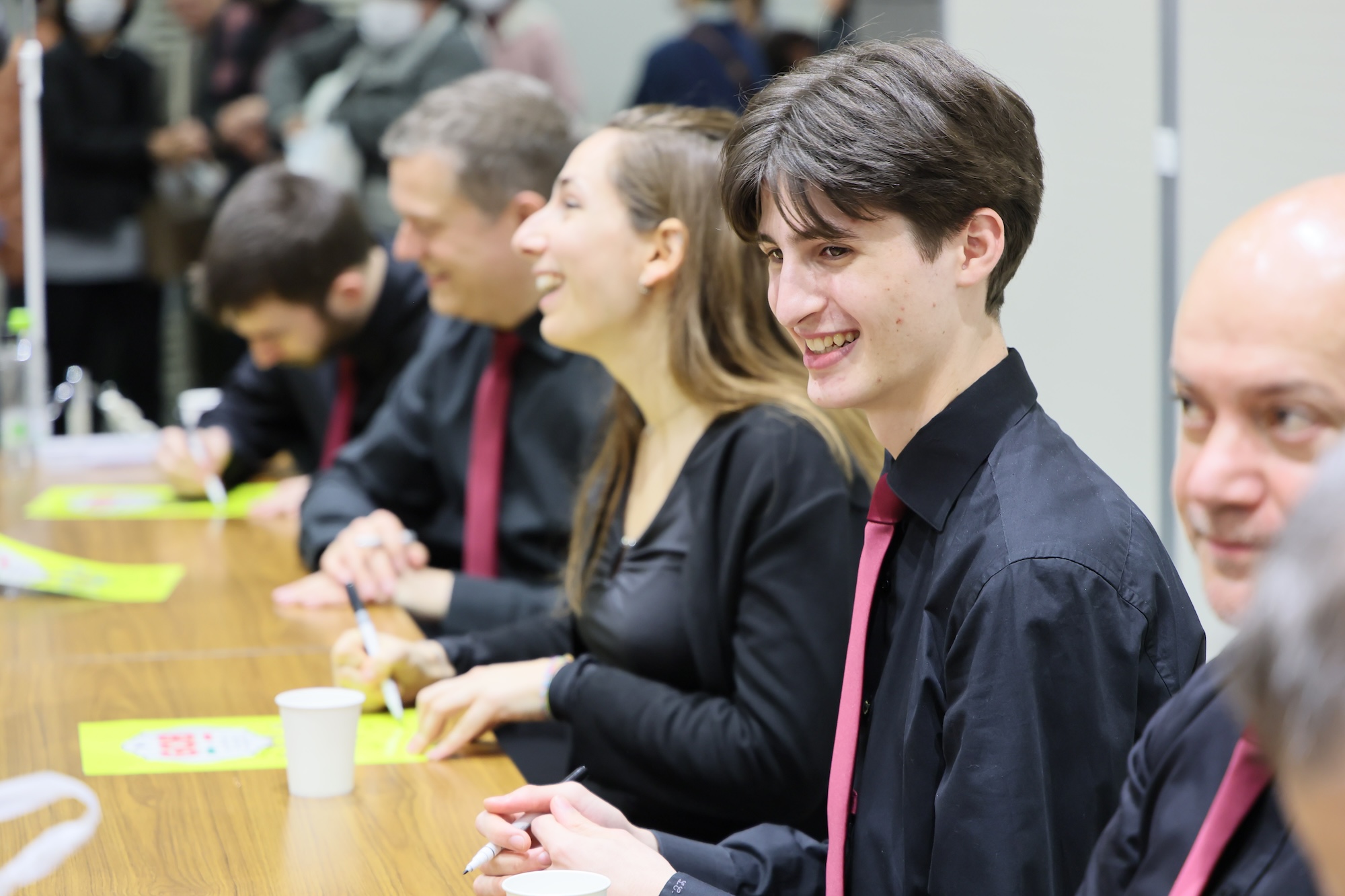
It was also a pleasure to meet audience members after the concert, sign autographs, and hear from enthusiastic listeners about how deeply our music had touched their hearts.
MIN-ON:
G.O.B. has a rich history and holds a special place in Budrio’s ocarina tradition. As a member of this distinguished ensemble, what do you value most about carrying forward its musical legacy?
Boccaletti:
G.O.B. has a history spanning nearly 160 years. It was founded before both the unification of Italy and Japan’s Meiji Restoration, making it a truly remarkable musical tradition. We feel a profound sense of responsibility to preserve this heritage and ensure that it continues to thrive for future generations.
Coming to Japan is a wonderful opportunity because it allows us to introduce this tradition to new audiences and broaden the number of people interested in the ocarina. It also reminds us how powerful this tradition is. The music we make touches people’s hearts, and experiencing that is a wonderful part of the legacy we are carrying forward.
MIN-ON:
How do you strike a balance between honoring tradition and exploring new musical ideas and forms of expression?
Boccaletti:
One of the ocarina’s greatest strengths is its remarkable versatility. Performing as a seven-member ensemble allows us to create a rich, expressive sound and to interpret virtually any genre of music. The ensemble’s roots are in classical and operatic music. The earliest ocarina players performed transcriptions of opera and other classical masterpieces.
Today, however, we play everything—from classical repertoire to the wonderful music of Joe Hisaishi. We greatly value the fact that this instrument allows us to play such a wide range of music, and we love showing that versatility to audiences in Japan.
MIN-ON:
What do you think is the ocarina’s unique charm?
Boccaletti:
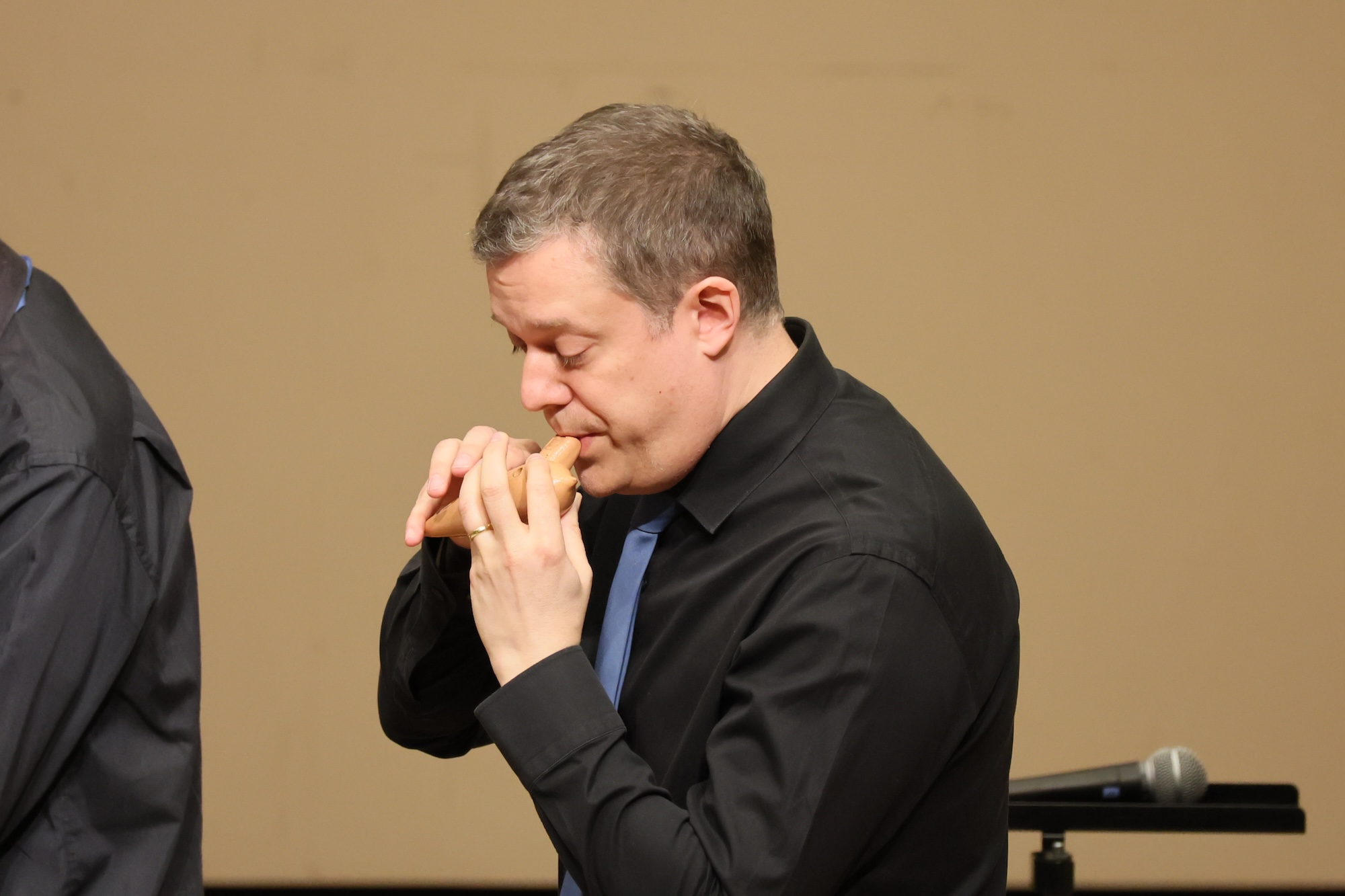
The ocarina is a very immediate and accessible instrument. It is also remarkably simple in design. Physically, it is what is known as a Helmholtz resonator—a simple type of flute that produces an exceptionally pure tone.
It is difficult to tune, but it is also a very good instrument for people who want to begin making music. Many amateurs take up the ocarina because it is easy to pick up, and you can begin producing music very quickly. At the same time, performing as a septet with seven different ocarinas is actually quite difficult.
That is one of the instrument’s great attractions: it can be simple and accessible for amateurs, yet also become a sophisticated ensemble instrument capable of performing complex music. Its versatility means you can do almost anything with it.
MIN-ON:
What do you find most distinctive and rewarding about performing together as a seven-member ensemble?
Boccaletti:
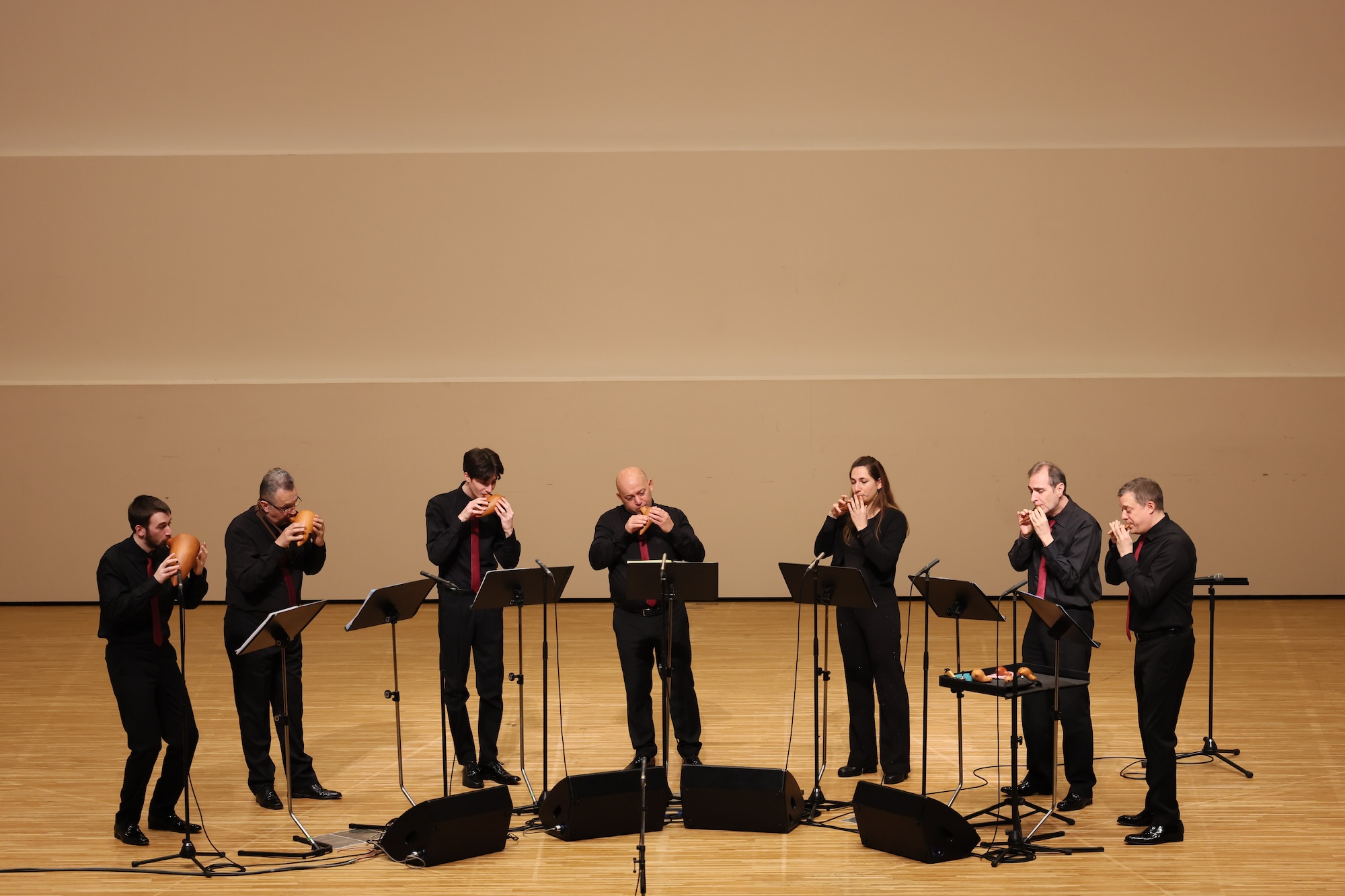
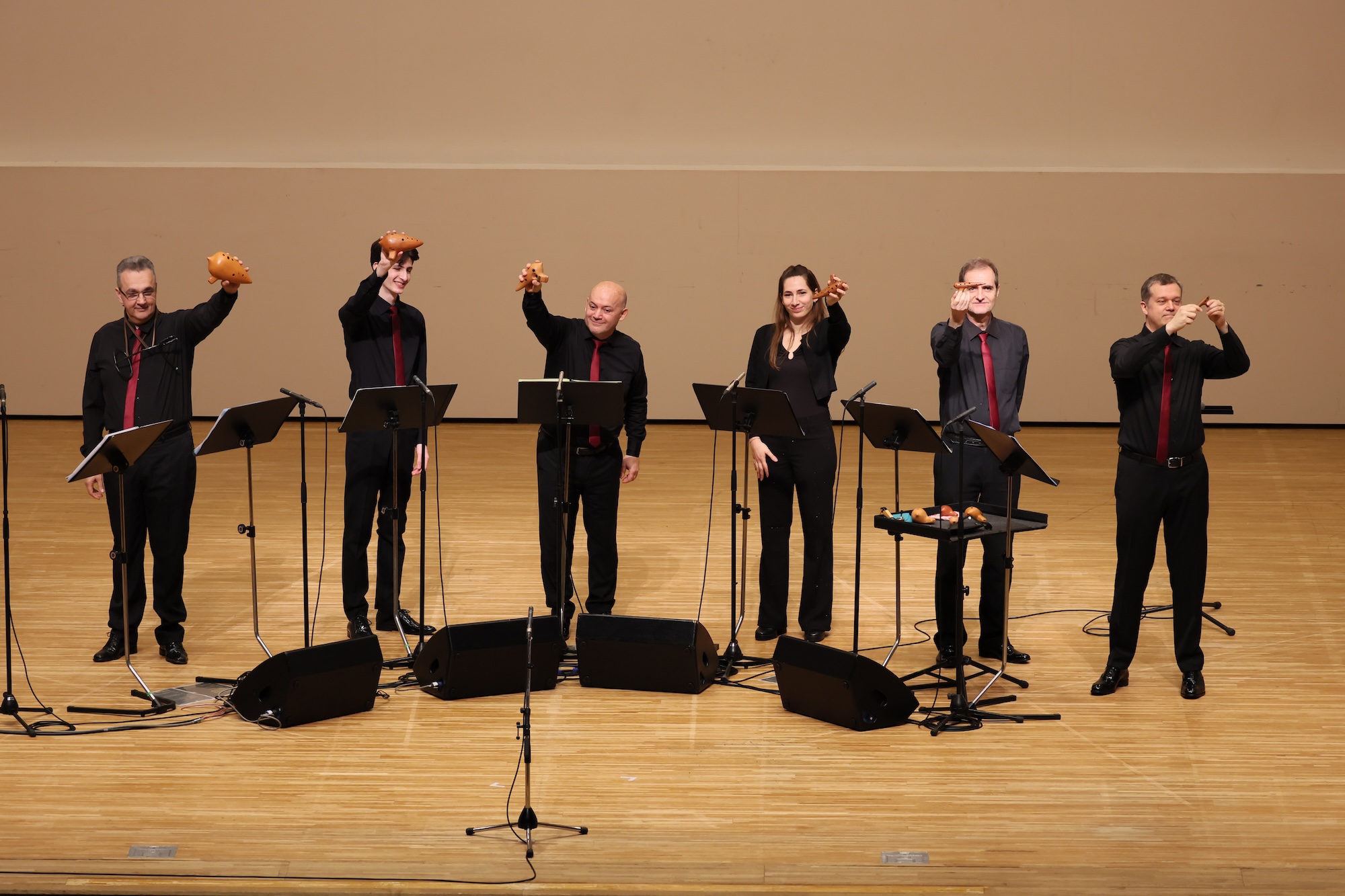
Playing seven ocarinas together is a very particular experience. The ocarina septet is actually the largest family of wind instruments in the world, and it is a very particular experience because the seven musicians have to play as though they were one instrument.
Being one of seven musicians, carefully tuning our instruments so that the ensemble produces the rich, unified sound of an organ creates a truly special experience. On stage, we breathe as one and play as one. It is a sensation rarely found in other forms of ensemble playing, and that is one of the ocarina’s most distinctive and compelling qualities.
MIN-ON:
Having performed in many countries, how have you experienced the power of music to bring people together and foster cultural exchange through the ocarina?
Boccaletti:
We have performed in many places around the world—from the United States to Japan, from China to Australia, and throughout Europe—and we have experienced the power of bringing music to different cultures and different people.
Often, we perform for audiences with whom we do not share a spoken language. We cannot understand one another through words, but we understand one another through music. These experiences have given us a strong sense of the power of making music, listening to music and sharing a musical experience.
Playing the ocarina in the wonderful concert halls that Min-On has organized for us in Japan makes each concert a kind of communion: we come together with the audience and share an experience. We have experienced this around the world, but it is especially meaningful here in Japan, where people listen to our music with great attention and care.
MIN-ON:
Finally, would you like to share a message with everyone who attended the concerts and with people who love music?
Boccaletti:
First of all, thank you for coming to our concerts. We love playing, and we love performing for people who enjoy listening to our music. These concerts in Japan over the past three years have been a wonderful experience.
They have shown us the power of music, and especially the power of making live music together in concert hall—you listening and us playing.
I wish all of the very best, and I wish you a life filled with music. Particularly in difficult times, music helps us remember that beauty is what makes life worth living.
Thank you for coming, and best of luck to everyone who will take up the ocarina in the years ahead.
——————–
Profile
Giulio Boccaletti (1st Ocarina, Gruppo Ocarinistico Budriese)
Giulio Boccaletti performs first ocarina with Gruppo Ocarinistico Budriese (G.O.B.), the historic ocarina ensemble from Budrio in northern Italy. Founded in 1864, G.O.B. now performs as a septet using seven ocarinas of different sizes. The ensemble carries forward the tradition associated with Giuseppe Donati, creator of the modern ocarina, and in 2011 was recognized by the Italian Ministry of Culture as cultural heritage.
——————–
◆ Concert News
https://www.min-on.org/18666/