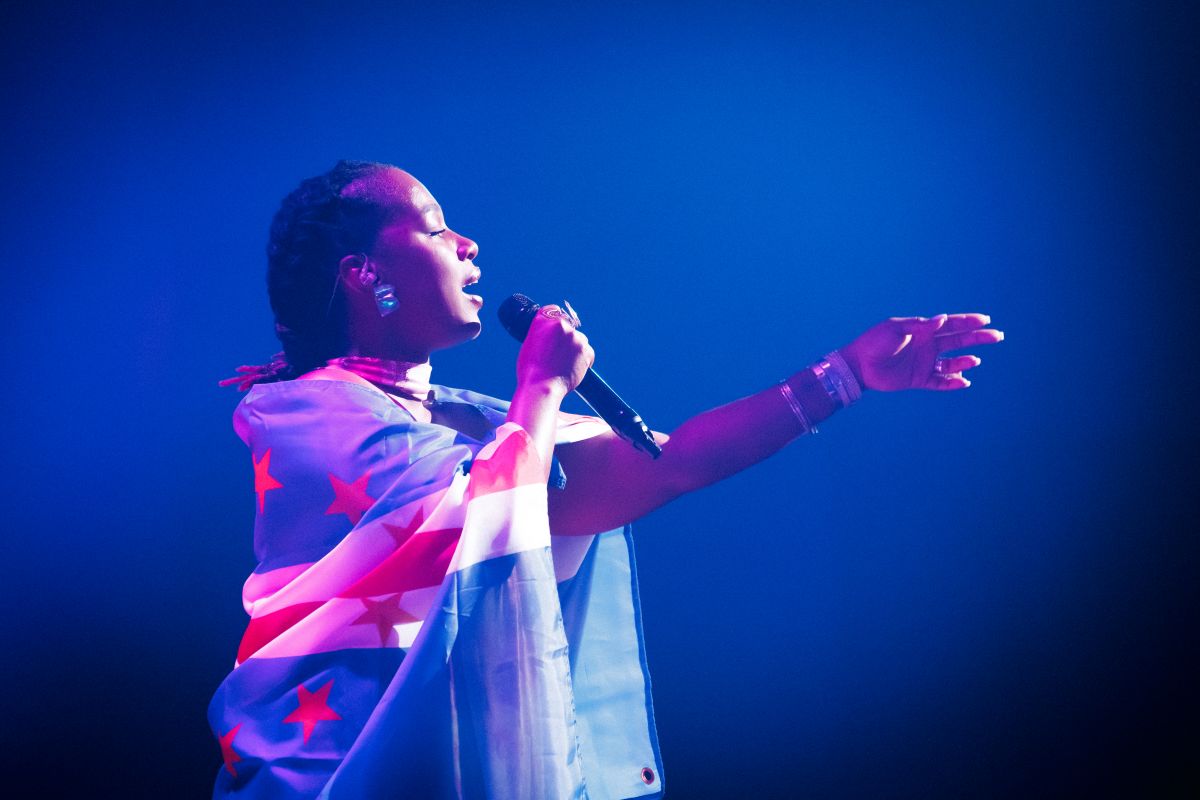
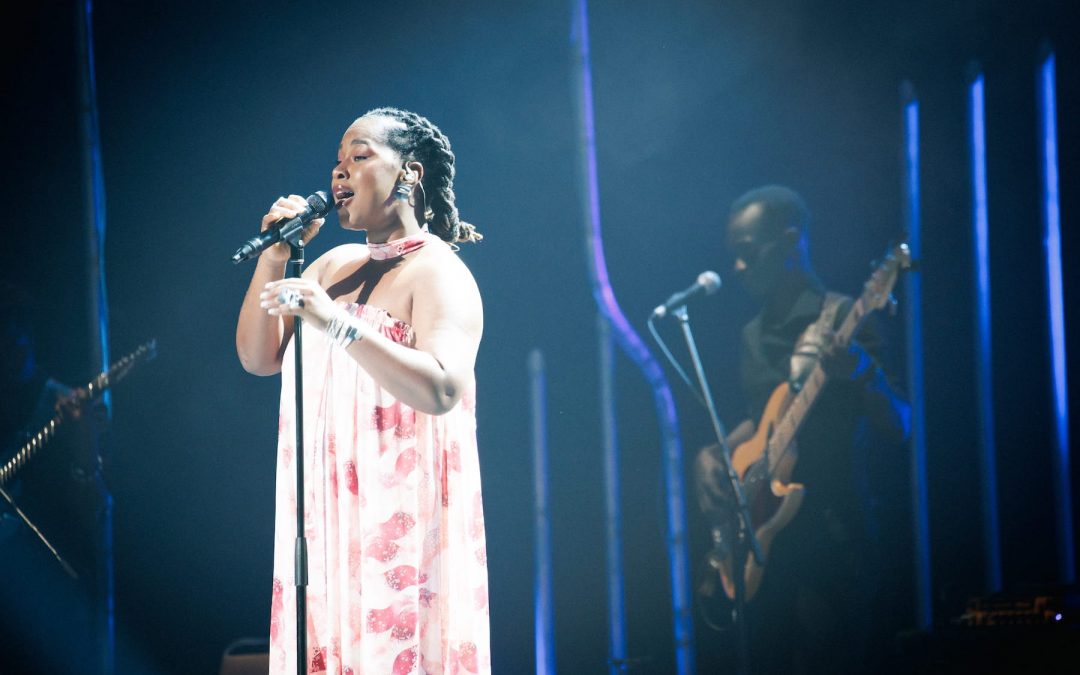
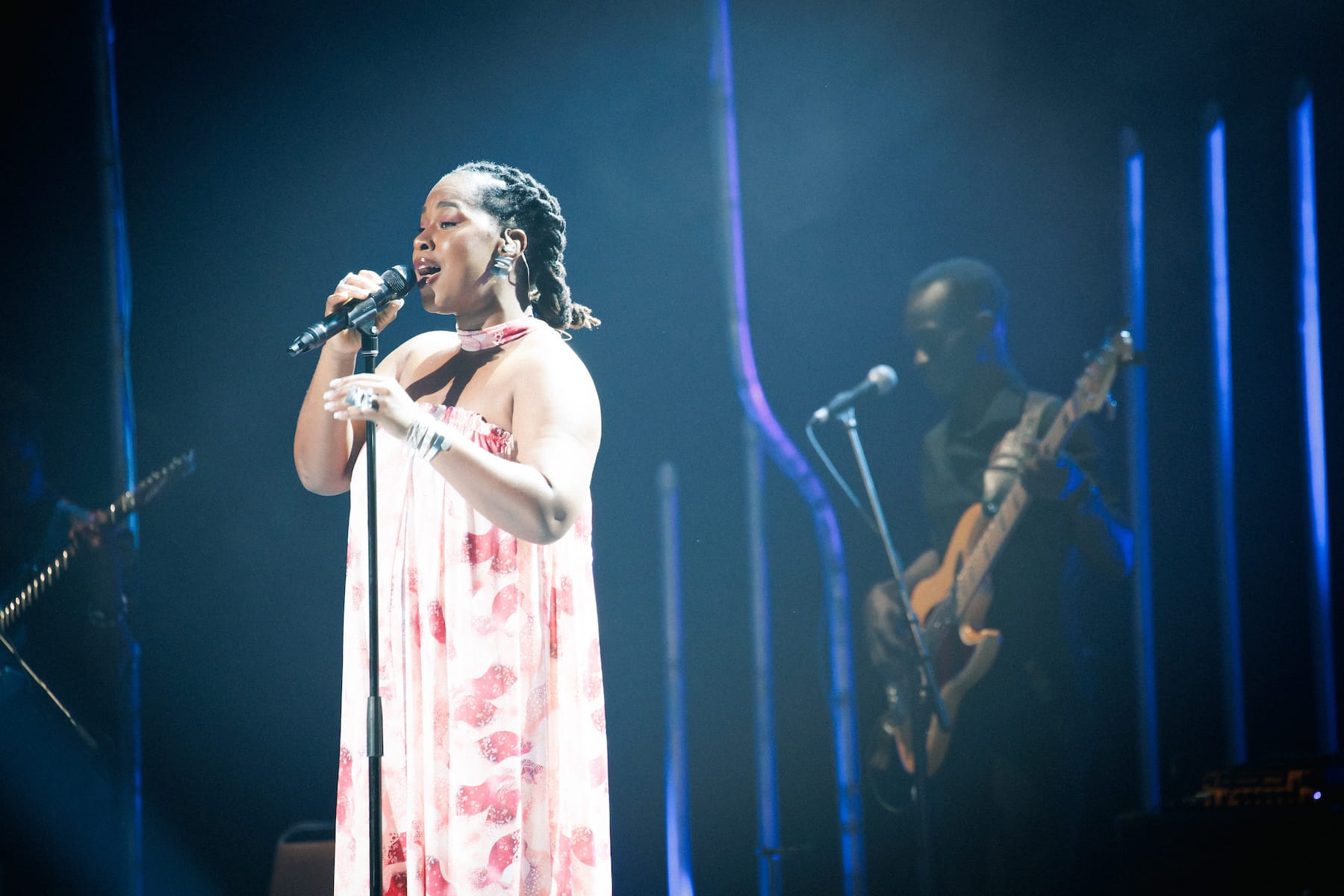
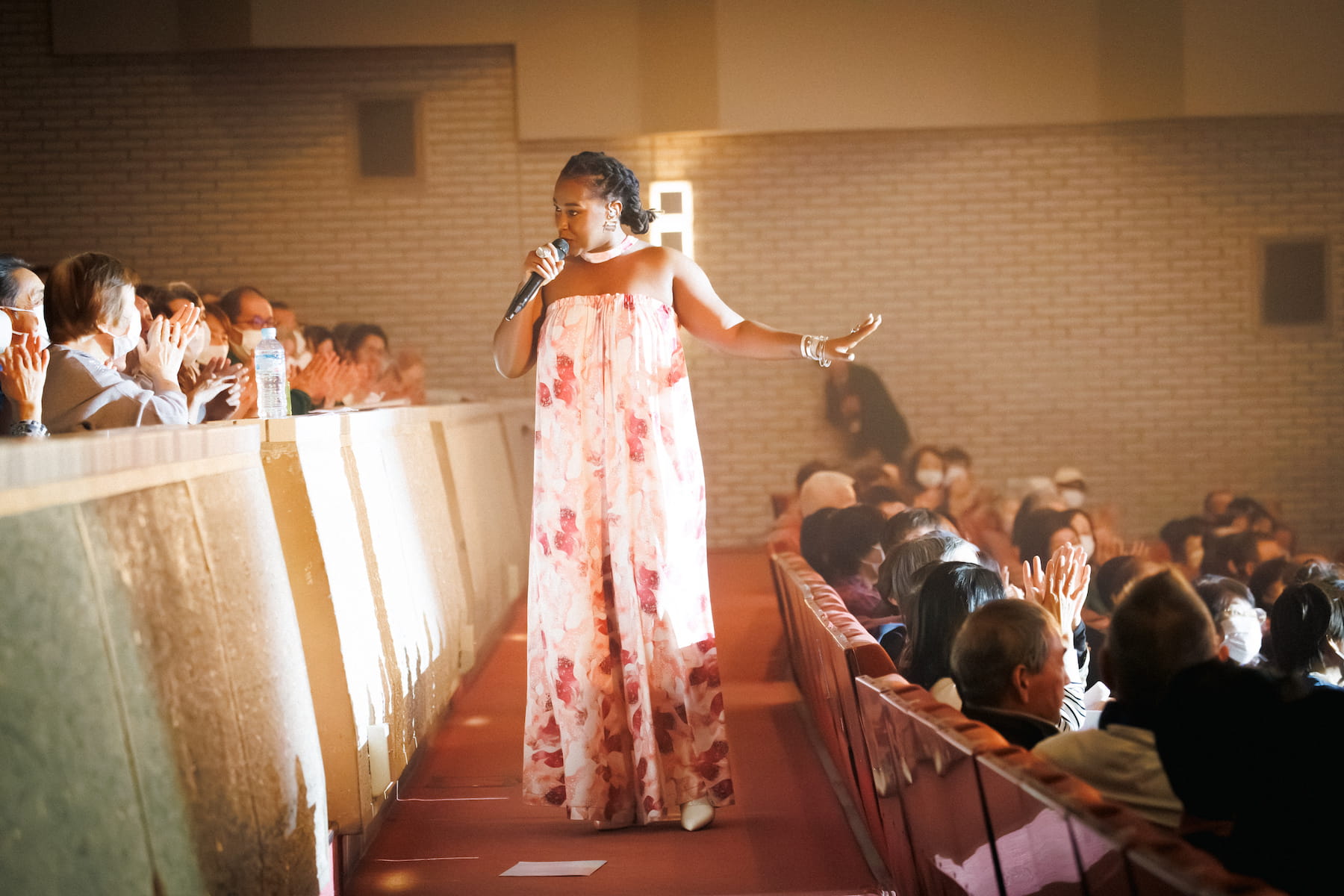
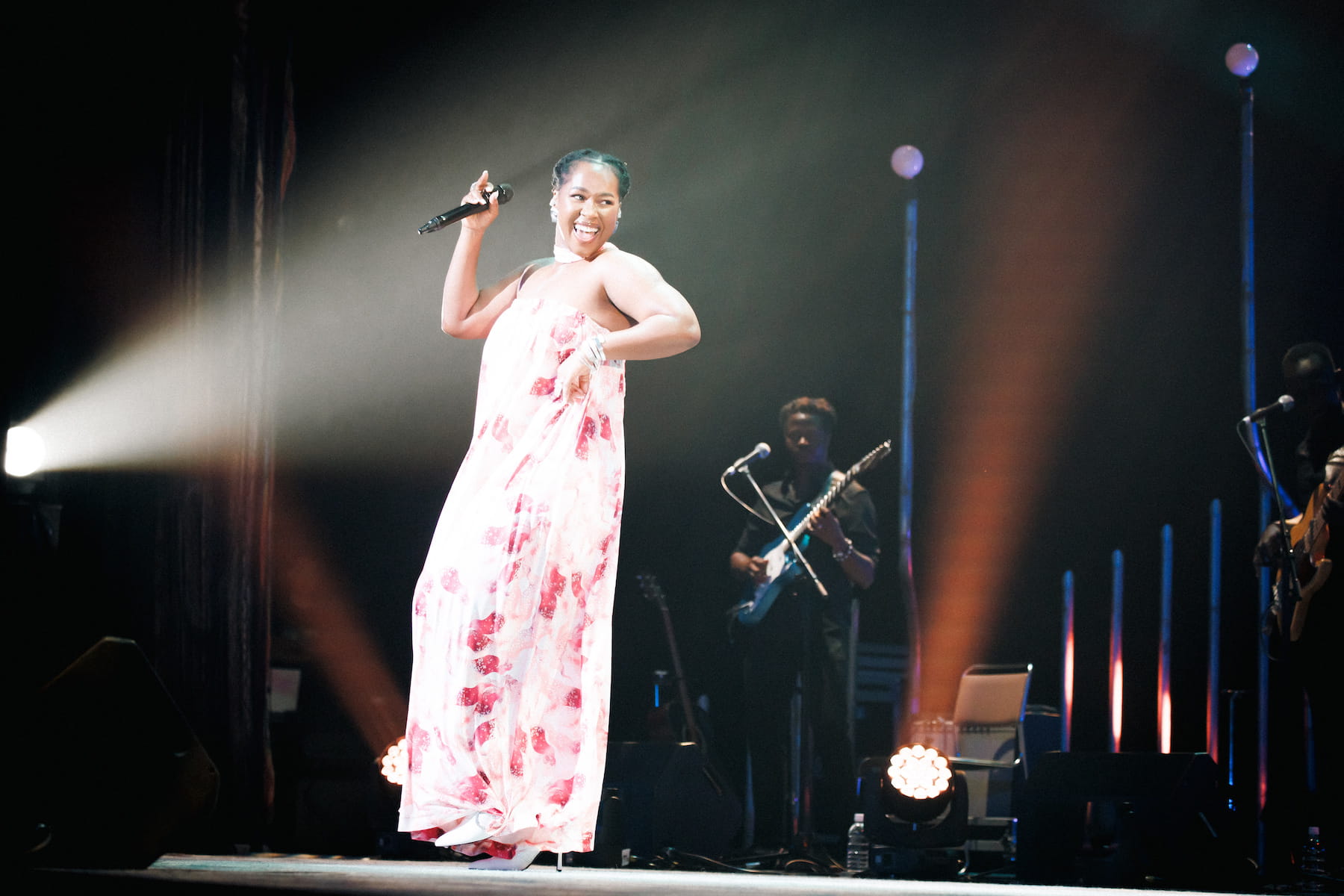
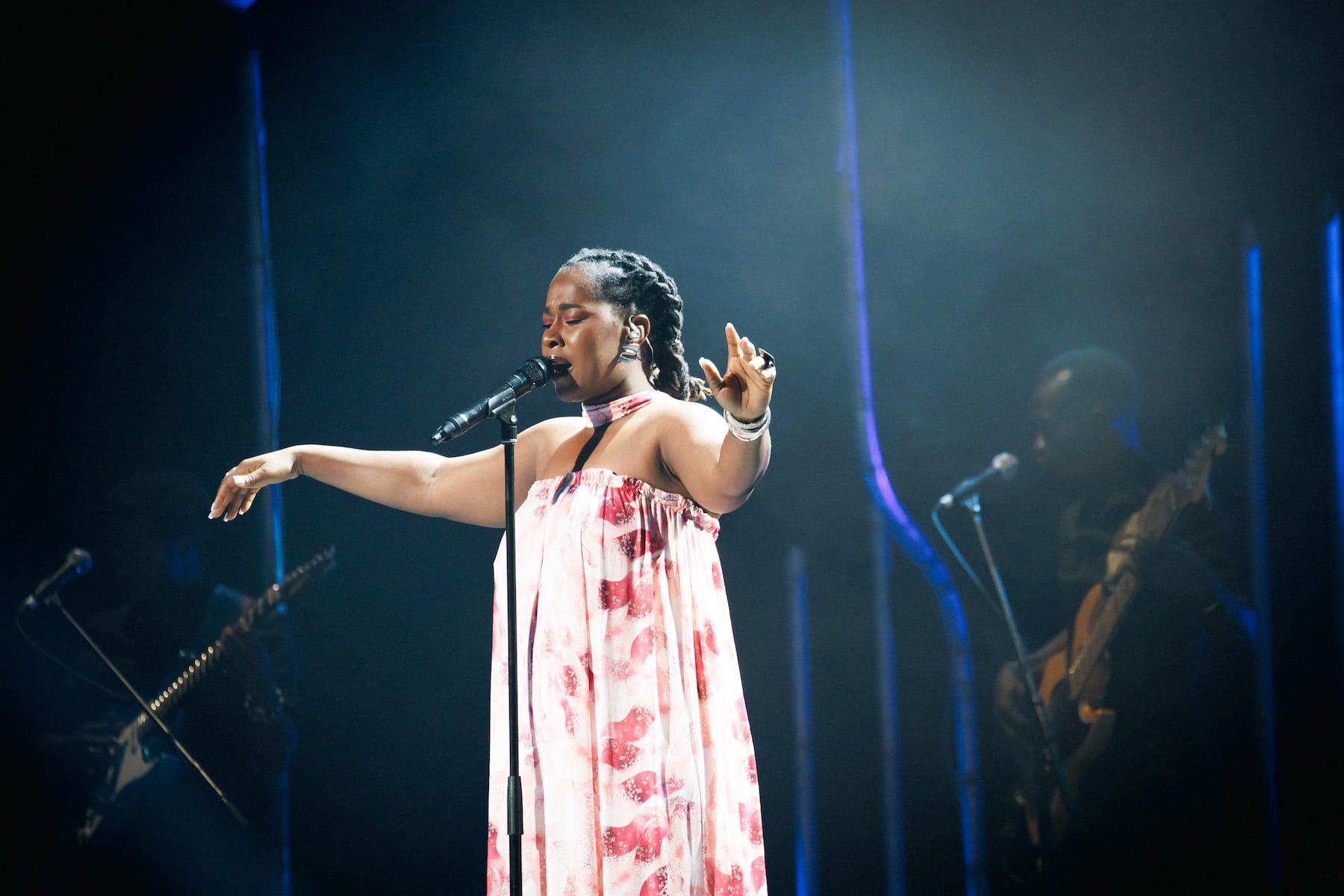
To commemorate the 50th anniversary of diplomatic relations between Japan and Cabo Verde—an island nation off the west coast of Africa—Min-On welcomed celebrated Cabo Verdean vocalist Elida Almeida and her band for their first-ever cultural exchange with Japan. From November 5 to 18, 2025, the group performed in eight cities across Japan, captivating enthusiastic audiences at every concert. During the concert tour, we sat down with Elida to discuss her musical journey, her homeland, and the messages she hopes to convey through her songs. (Interview conducted on November 14, 2025.)
◆ Watch the interview highlights below
A singer-songwriter from Cabo Verde, Elida Almeida was born in 1993 on Santiago Island. She honed her voice singing in church and deepened her love for music while working at a local radio station. Her 2015 debut album Ora Doci Ora Margos (“I Can’t Help But Sing”) gained widespread attention and earned her the Prix Découvertes RFI, a French award that highlights emerging musical talent. Since then, she has performed at major world music festivals across Europe, North America, and Africa. Recognized as a leading voice of a new generation of African pop, she blends her warm, powerful vocals with modern sensibilities and the traditional sounds of her homeland, including genres such as morna, batuku, funana and tabanka.
MIN-ON: To start, how have you enjoyed the concert tour and your stay in Japan so far?
Elida: It’s been amazing – this whole concert tour, this journey. I’m collecting so many beautiful memories, and I already know I’m going to miss you all. I truly love it.
MIN-ON: During the concert, you mentioned that you want to share a message of hope. What does “hope” mean to you personally?
Elida: Yeah. I think… it’s my love—it’s what moves me when I wake up. Even on bad days, I try to focus on this small… I don’t know, this little “voice” or “light” inside me that I can switch on. This kind of hope really drives me and helps me stay focused on my journey, for myself, for my family, for my children. That’s what keeps me going.
MIN-ON: How do you try to express that hope in your music and connect with your listeners?
Elida: I try to pour that into my music, and I think that’s where the connection between me and the audience comes from. It’s like I’m speaking on behalf of them. I try to step into their minds and write about the things they want to say but may not have the voice to express in the way I can as an artist. I have this chance to record, so I think my music becomes a line of connection between me and my people in Cabo Verde, and also the people outside of Cabo Verde.
MIN-ON: In your songs, you often use the Creole word “sodade,” which expresses the feeling of “missing someone” but is difficult to translate directly. Could you explain the emotion behind this word?
Elida: First of all, it’s natural that people think about that word when they think about Cabo Verde, because we travel a lot. We have a lot of emigration – there are more Cabo Verdeans living abroad than in the country itself. So that word “sodade” really means “missing someone.” It doesn’t have a direct translation. It’s just our way to express “I miss you, I wish you were here” Because emigration is such a big part of our lives, it has become “our” word.

MIN-ON: Many people associate Cabo Verdean morna with sadness and melancholy, yet your music is full of energy and dance. How do you view your relationship with morna and the element of melancholy in your songs?
Elida: If you don’t hear much morna or melancholy in my songs, it’s because I’m from the south of Cabo Verde, from Santiago Island, where our rhythms and music are different. I grew up with music that’s more dance-oriented, livelier, fresher, you know?
I’m also fortunate to come from this part of the country. Of course, I feel sadness and melancholy too, but I also have this lively side in me that loves to sing, to jump, to dance. That’s why when you hear my music, it’s not sad or heavy, because we have also this energetic side in our culture.
We have these two sides in our musical culture. And for singers from the north as well, morna isn’t always about sadness. In morna and coladeira, you can talk about many things—love, loving someone deeply, personal struggles, even difficult topics like suicide.
It’s not that our music is only about sadness. When you look at the lyrics, they aren’t always focused on sadness or mourning.
MIN-ON: You’ve already released several albums and are now working on your next one. What kind of stories and themes will you be exploring in your songs?
Elida: I already have four, and I’m about to release the fifth one in the first week of December 2025.
In all of my albums, there are always some tracks that talk about myself—my life, my relationship with my mother, the advice my grandmother gave me, the conversations I’ve had with my sister, the feelings I had when I found out I was going to have my first son at sixteen.
But I also feel a responsibility to look around, to see and feel what Cabo Verdean people want to say to the world, to the government, to politics. So, I mix those two things—my personal life and our social reality. That’s who I am.
MIN-ON: You often sing about women’s lives. Why is this theme so important to you?
Elida: I grew up surrounded by women. I lost my father when I was eight, and I was raised first by my grandmother, then my aunt, and later my mother. All my life, I only had women by my side—women who encouraged me, who educated me, and who gave me everything that made me what I am today, here in Japan and on every stage.
So I always feel that I’m going to fight for women, because I know what they go through to raise us. In Cabo Verde, I don’t know, maybe 80% of Cabo Verdean women are both mother and father all the time. I am concerned about this. In all my work, I always have a song that talks about, for example, psychological violence or physical violence—things that women often suffer from. Unfortunately, in Cabo Verde we have a lot of cases where woman are killed by a man because their relationship was over.
In this show, for example, the second or third song is about a relationship that ended, but the man couldn’t accept it. In the end, he killed the woman, then himself, leaving their child alone. Sadly, this happens far too often.
And when I moved to Portugal, I realized it doesn’t only Cabo Verde—this happens all over the world. So, in every album, I try to speak to women, to encourage them to leave such relationships and to remind them that women are, you know, the power behind everything.

MIN-ON: In the Cabo Verdean music scene, you’re regarded as a pioneering female singer-songwriter. How do you view your role, especially as a woman who composes her own music?
Elida: I hope so—I hope I inspire others, and I believe I do. In our music industry, we’ve always had incredible female voices—women with beautiful, powerful vocals like Cesária and many others.
But Cesária, for example, wasn’t a composer, she didn’t write her own songs. I think I’m one of the first women to say, “Wait, I can do this. I can write for myself. I can express what I’m feeling and turn it into a song.”
I still include some male composers on my albums because I genuinely love their work, but on my first album I told myself, “I can do this.” I showed my producer the songs I had written, and he said, “You did this? This is your composition?” I said, “Yes,” and he replied, “Oh my God, this is beautiful.”
People started saying, “We now have the first women to release an album made almost entirely of her own compositions.” After that, many other women began singing their own songs as well. It’s not that composing was “unusual,” but we already had many great male composers doing excellent work, so it was normal for singers to perform their songs. And composing isn’t easy—it’s not simple to find a melody that can truly touch people’s hearts.
I think many women were more focused on being on stage, performing, and conveying the messages that men had written. But I like to do everything myself. So, I said, “No, I’m going to compose, I’m going to play some guitar, I’m going to write, and I’m going to be on stage performing.”

MIN-ON: Looking at the path you’ve walked so far, it’s clear that you’ve opened new doors for other women of your generation.
Elida: But as I said, every time I go back to Cabo Verde—and now that I’m living in Germany, it’s been about seven years since I left—each time I return, I discover a new, beautiful voice and I think, “Oh my God, this country has so much talent.” It makes me so happy.
When I hear a song released by a teenager, and it’s her own composition, I’m like, “Oh my God.” I feel so proud to be part of a generation that can do all these things on our own, but can also do it together them. That’s really important.
And it’s important to know that you can do this on your own if you want to—if you work at it. I try to bring that mindset into my own life and into the way I raise my little baby—she’s already one year and six months—and I try to teach the same to my son. Because that’s where we can break harmful patterns, you know? By giving my son an education that teaches him to respect women and to let them do what they want to do.
MIN-ON: What is the driving force of hope in your life? What keeps you moving forward?
Elida: My life… I don’t know if it’s unfortunately or fortunately, but most Cabo Verdean people grew up like me – coming from nothing and trying to be something in life. I think we are all like that in Cabo Verde. We are born with nothing, and we are raised to always look for something better. That’s why we travel a lot, why so many of us leave the country to search for a better life. In my case, I found my way through hope and music. That is what moves me. It’s my family. I always had this thing inside of me that one day I would give my mother the beautiful life she dreamed of. To have my kids finish school, to try to be better, and to break the cycle of… how do you say… poverty. Just being from nothing. So, I think that’s my hope – the light that moves me.
MIN-ON: As a musician who addresses social issues, what kind of power do you believe music holds?
Elida: Power enough to help a woman realize she deserves better than a partner who contributes nothing, holds her back, or prevents her from becoming the woman she dreams of being. Power enough to awaken a woman who is trapped in a toxic or hidden relationship. Power enough to receive messages from people fighting cancer, for example, telling me that my first song helped them keep fighting—that it gave them hope and helped them believe that one day they will win their battle with cancer. Power enough to make society reflect on what we can do about the gang problems we face in Cabo Verde—like when people listen to “Forti Dor,” which speaks about that kind of conflict.
So I think that’s the kind of power my music has.

MIN-ON: Lastly, how has your visit to Japan been for you?
Elida: Yeah, it may sound cliché, but I genuinely love your country. I love the kindness of the people—everyone is always smiling. In Europe, we’re always rushing, trying to become something, constantly fighting against everything, only to come home exhausted and unable to fully be with our families.
Here, I’ve been truly surprised. I remembered this feeling from when I visited ten years ago, but not as strongly as now. This time, I had more time to really see how people are here—always in a good mood, radiating good vibes, always smiling. Thank you.
We’re learning from this. When we go back home, I’m going to carry this feeling with me and share it with my family. I want to bring this energy to the people close to me. Thank you for welcoming me and my family.
And your food is incredible. Your rice is amazing—it’s not “normal” rice. I need to find out what kind of rice you have here. Truly, I’m in love with your country.
◆ Concert News
◆ Min-On Music Journey: Cabo Verde Edition
If you have any comments regarding this article, please feel free to email us at publicrelations@min-on.or.jp
Min-On Concert Association
-Music Binds Our Hearts-